What It Takes to Replace a Hospital Roof Directly Above an Operating Room
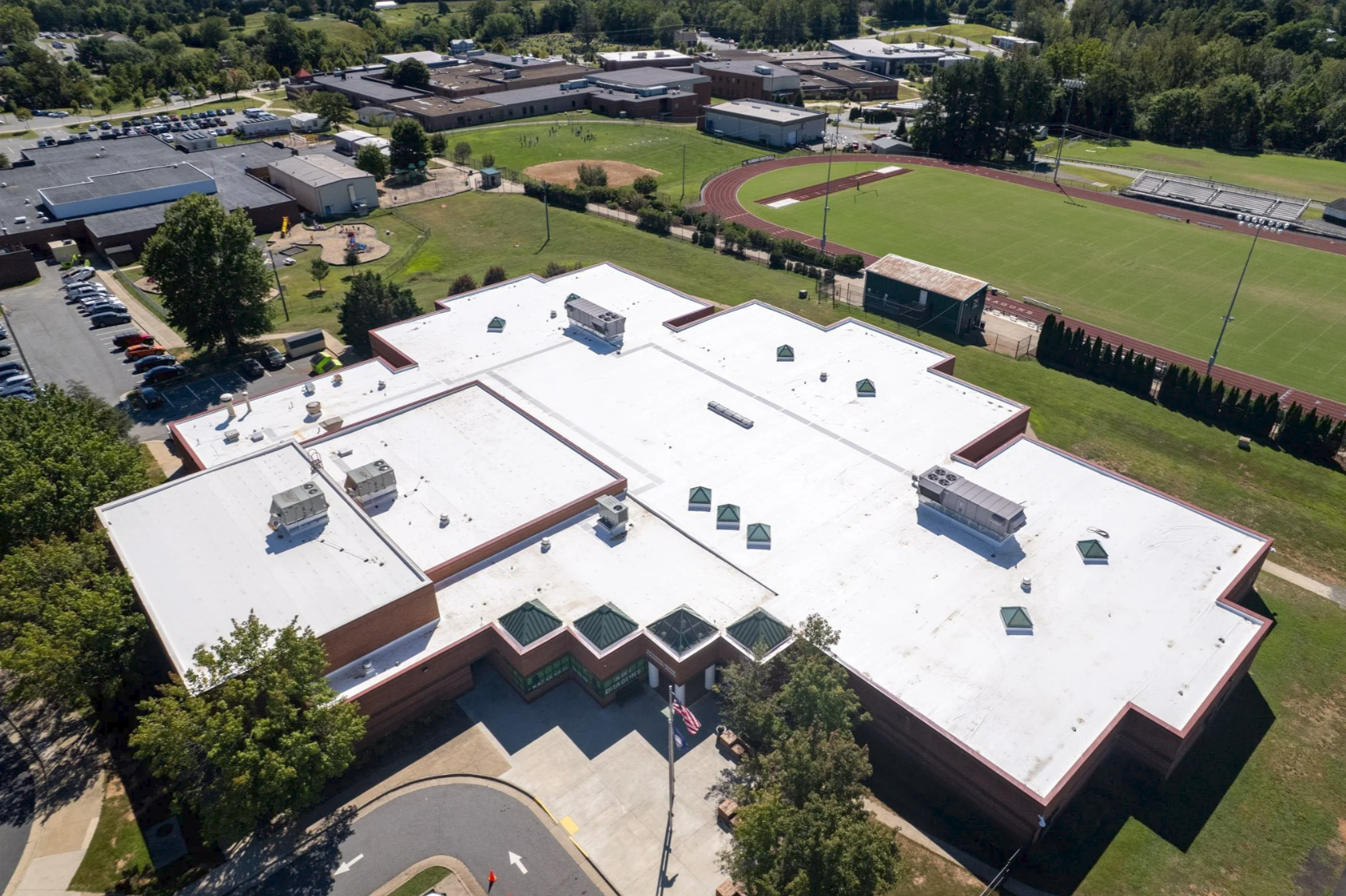
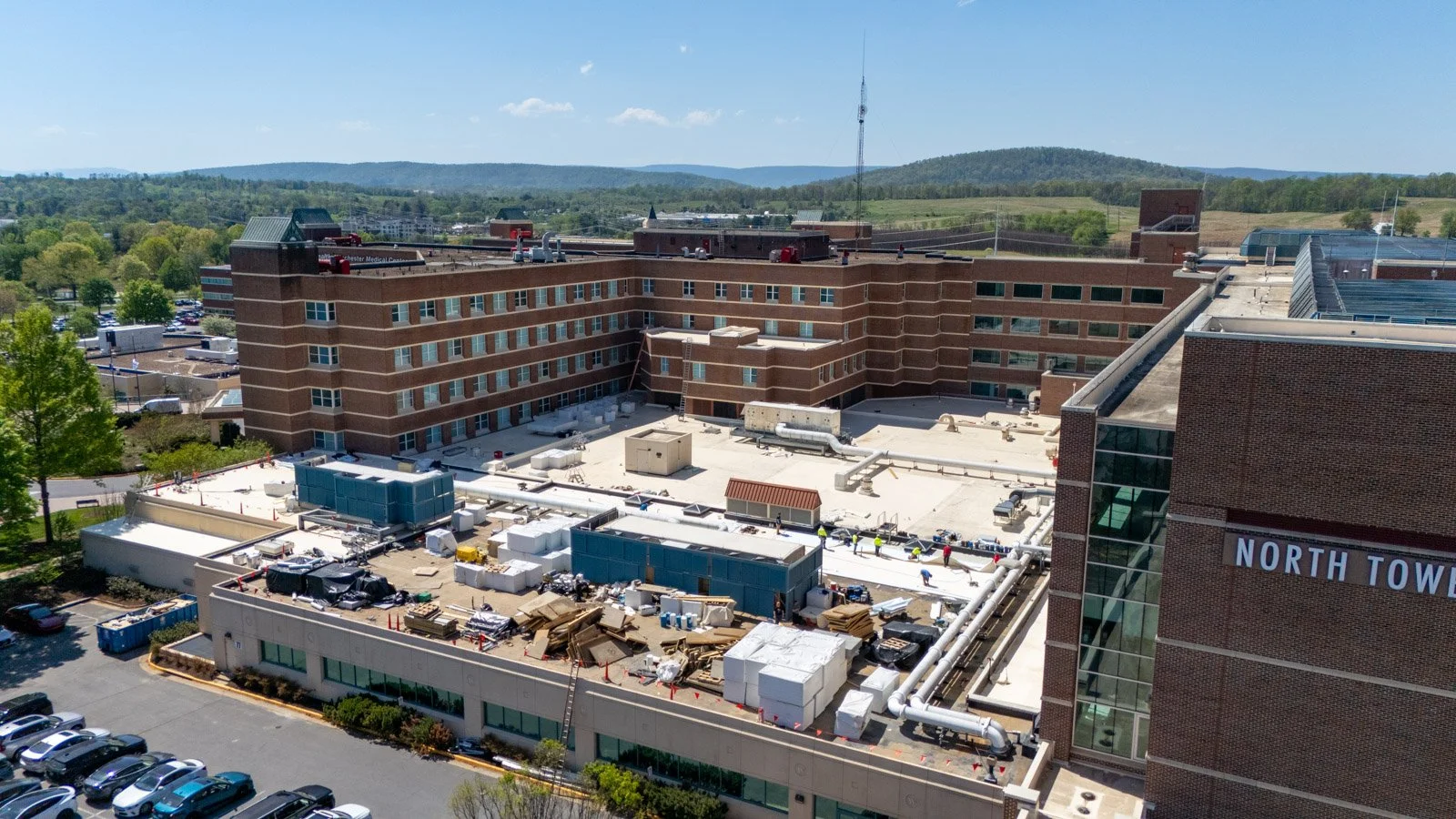
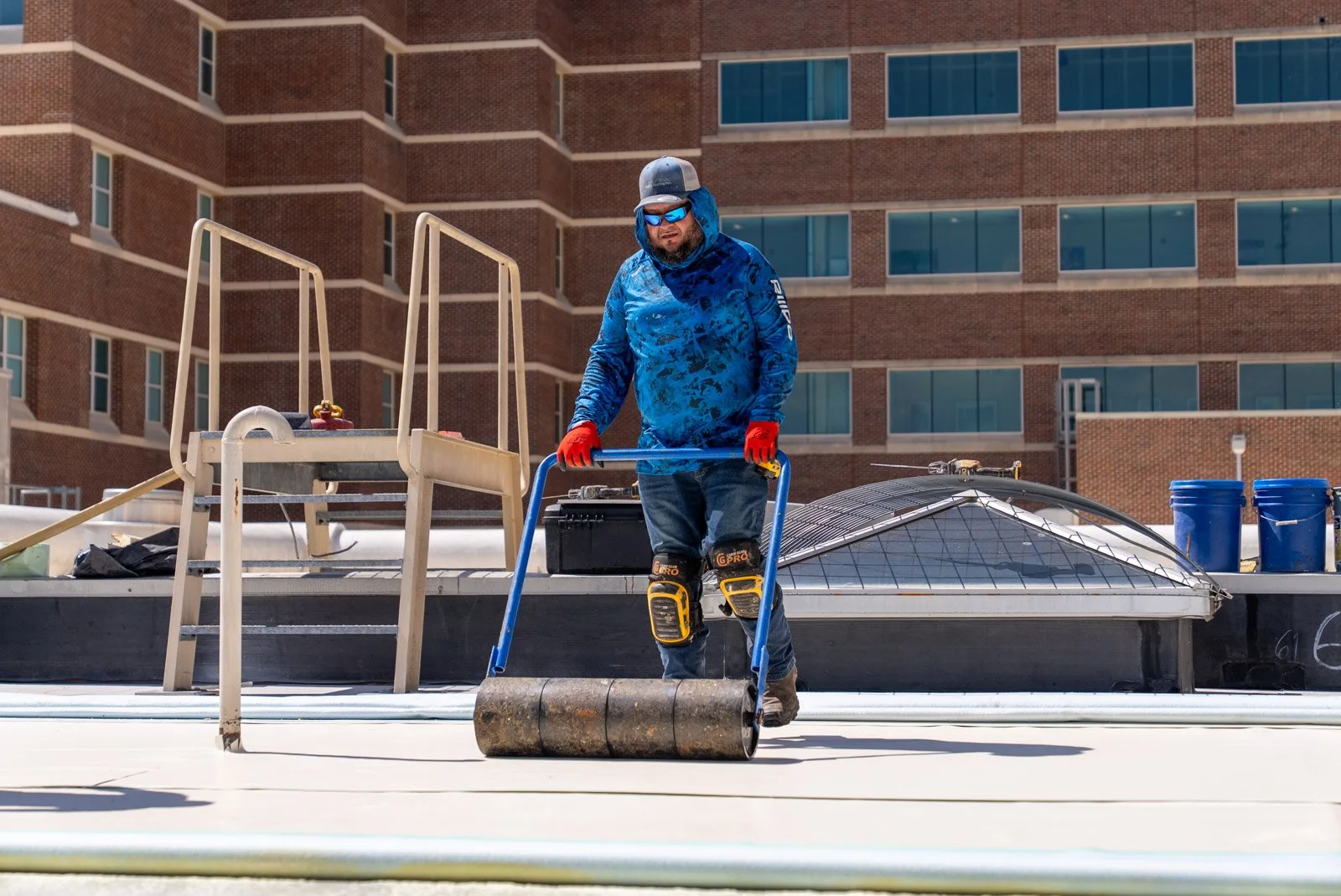
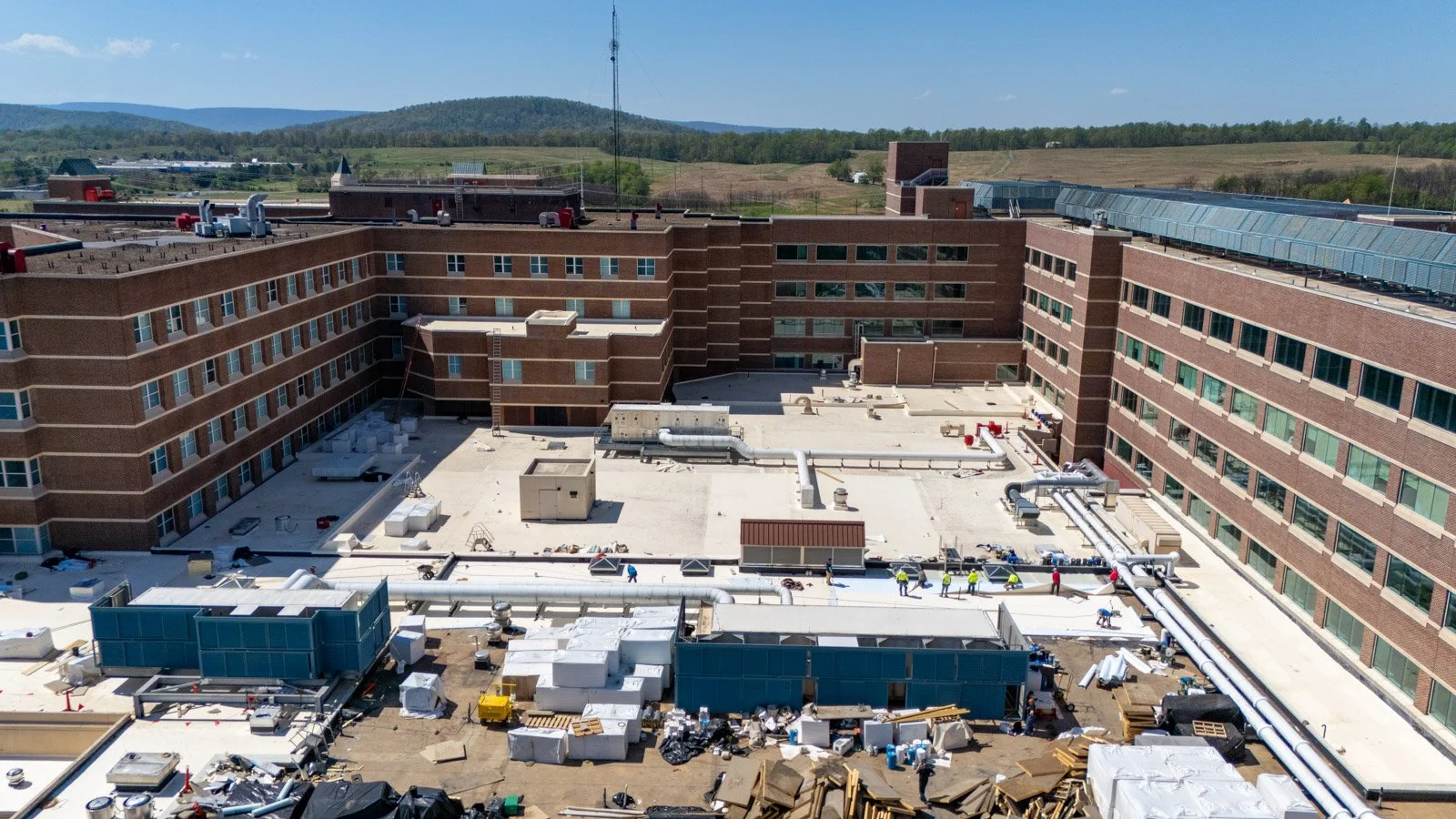
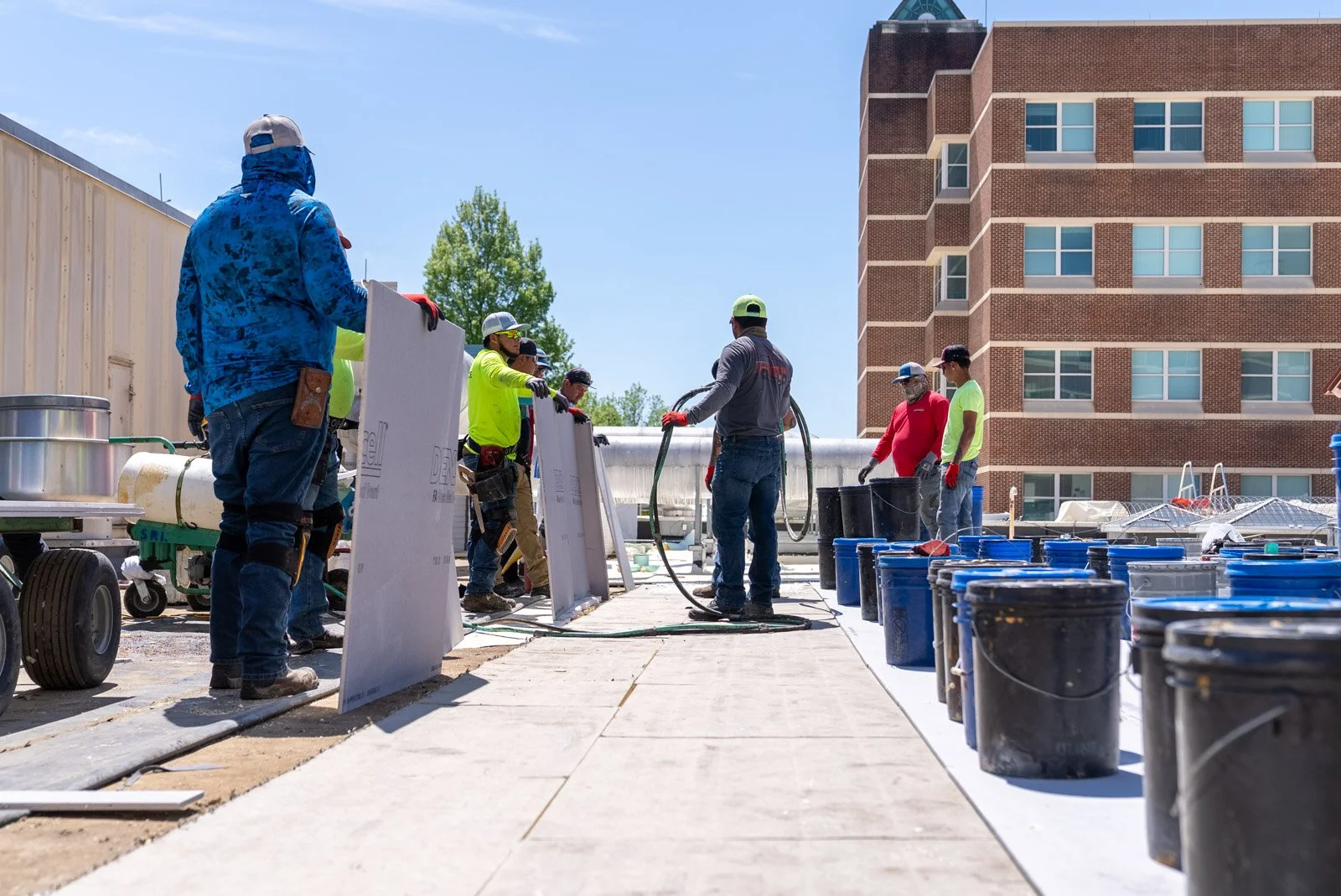
Our team completed a full commercial roof replacement at Valley Health Medical Center in Winchester, VA, performing a multi-section TPO roofing installation directly above an active operating room. Because critical medical procedures were taking place below, the project required careful coordination with hospital facilities staff, precise planning, and strict attention to noise, safety, and disruption control.
The scope included a 50 mil fiber-reinforced fleece-backed membrane roofing system, layered insulation, and a glass mat cover board, all installed to support long-term commercial roof performance in a demanding healthcare environment.
Identifying the Need for Replacement
During routine inspections, we began to see ongoing issues across the existing roof system. Flashing and seams were starting to fail, the membrane showed signs of wear, and small problem areas were becoming more consistent.
At that point, it made more sense to step back and plan for a full replacement rather than continue with short-term repairs.
Working closely with Valley Health’s facilities and maintenance teams, we built a plan that focused on long-term performance and reliability.
Working Through a Complex Layout
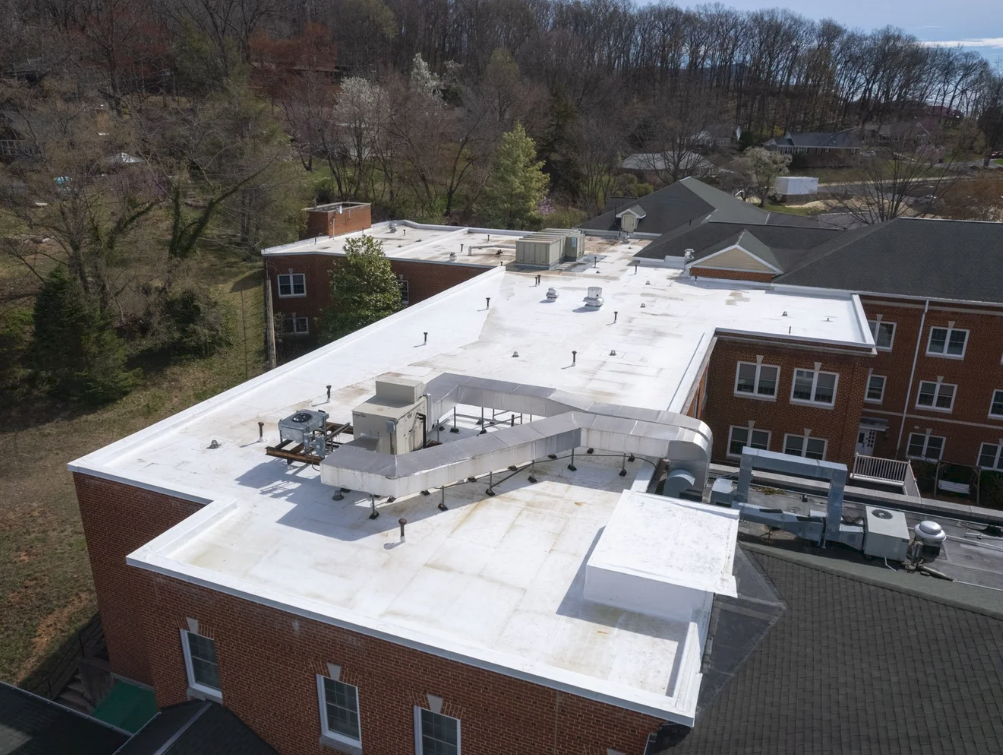
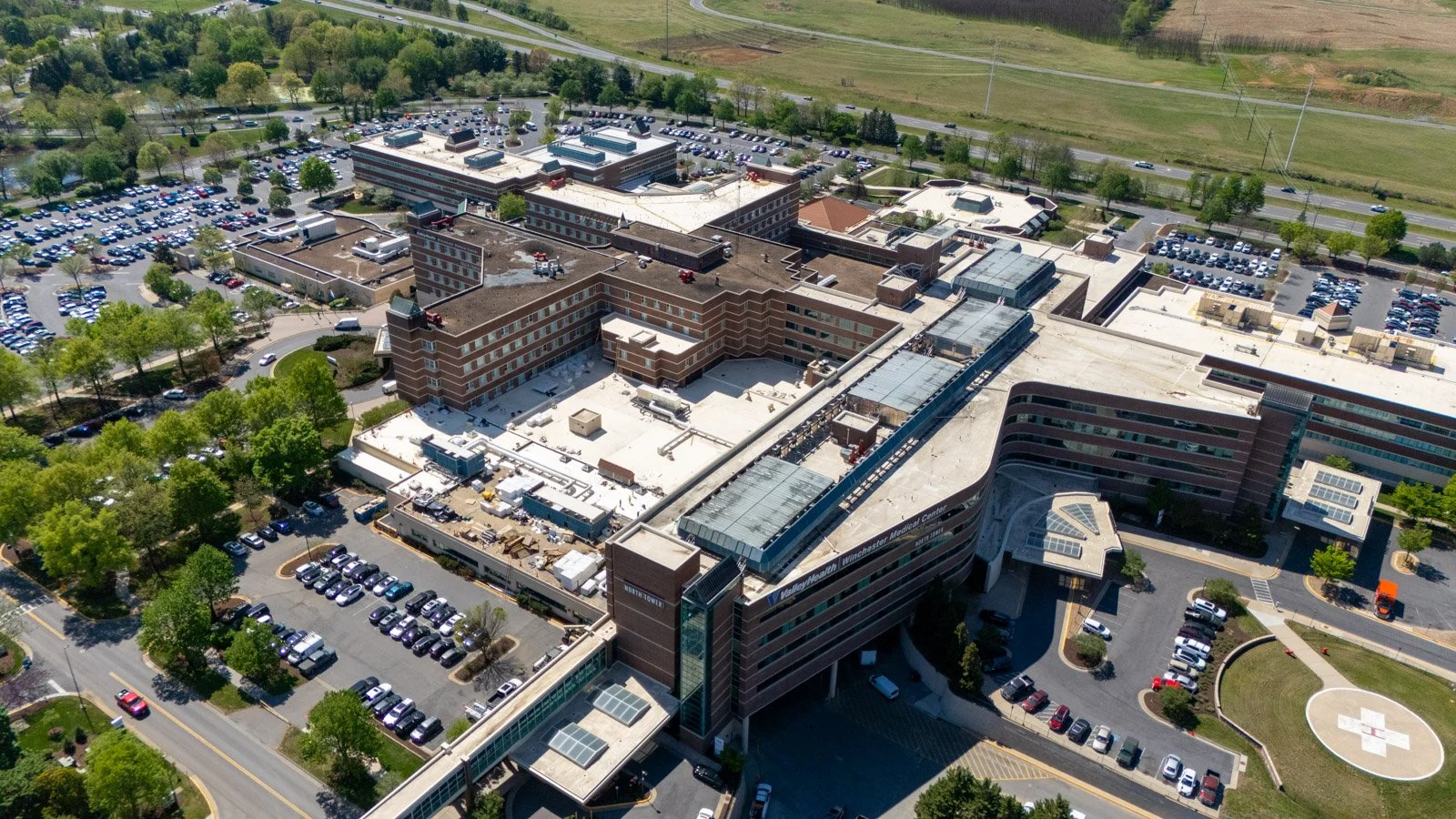
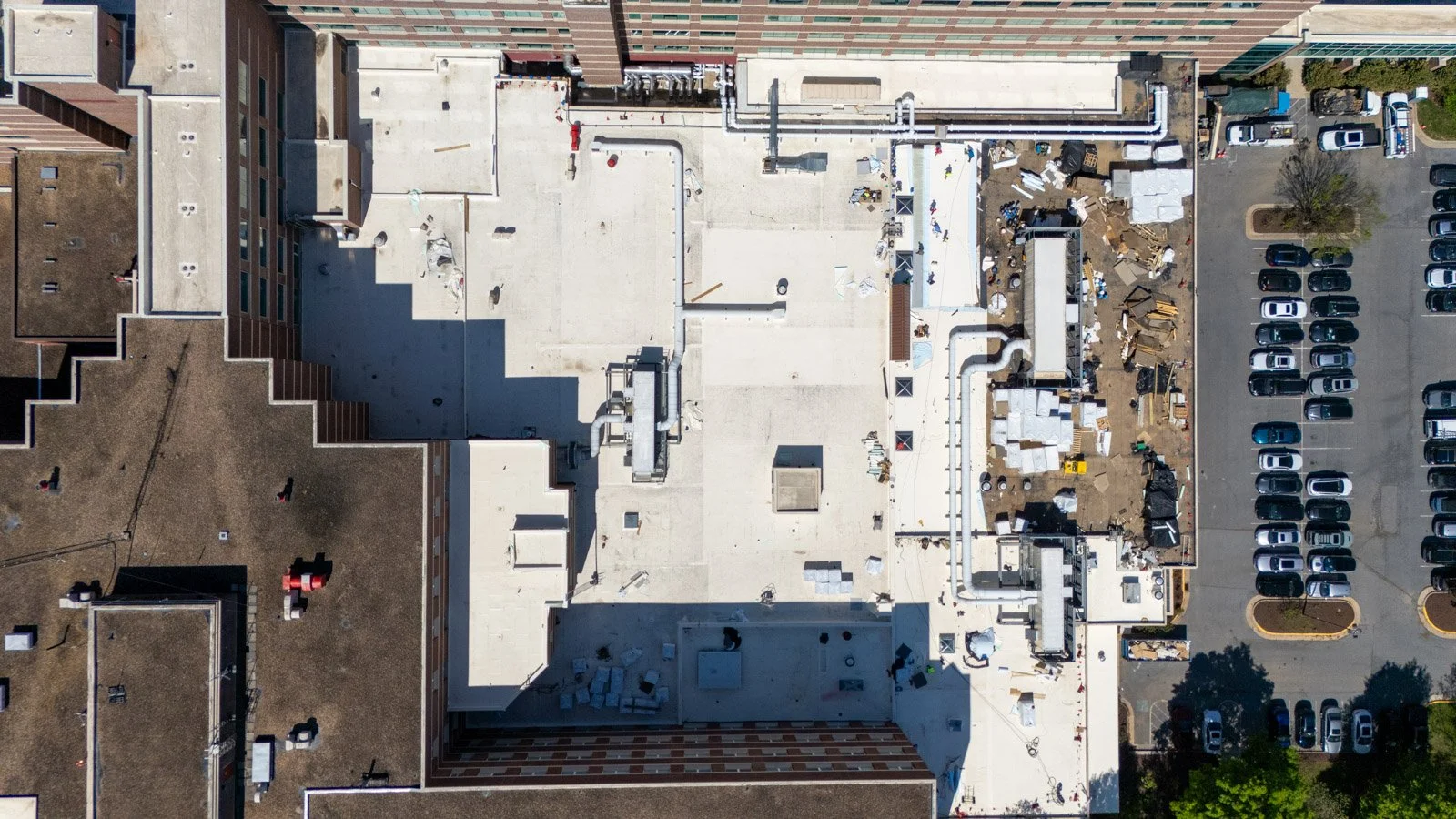
This roof is divided into multiple sections by parapet walls, which makes tear-off and installation more involved than a typical open roof.
On top of that, all work was happening above an operating room. That meant staying mindful of noise, cleanliness, and coordination at every stage of the project.
Installing a System Built to Last
The new roofing system was selected with durability and performance in mind for this healthcare facility.
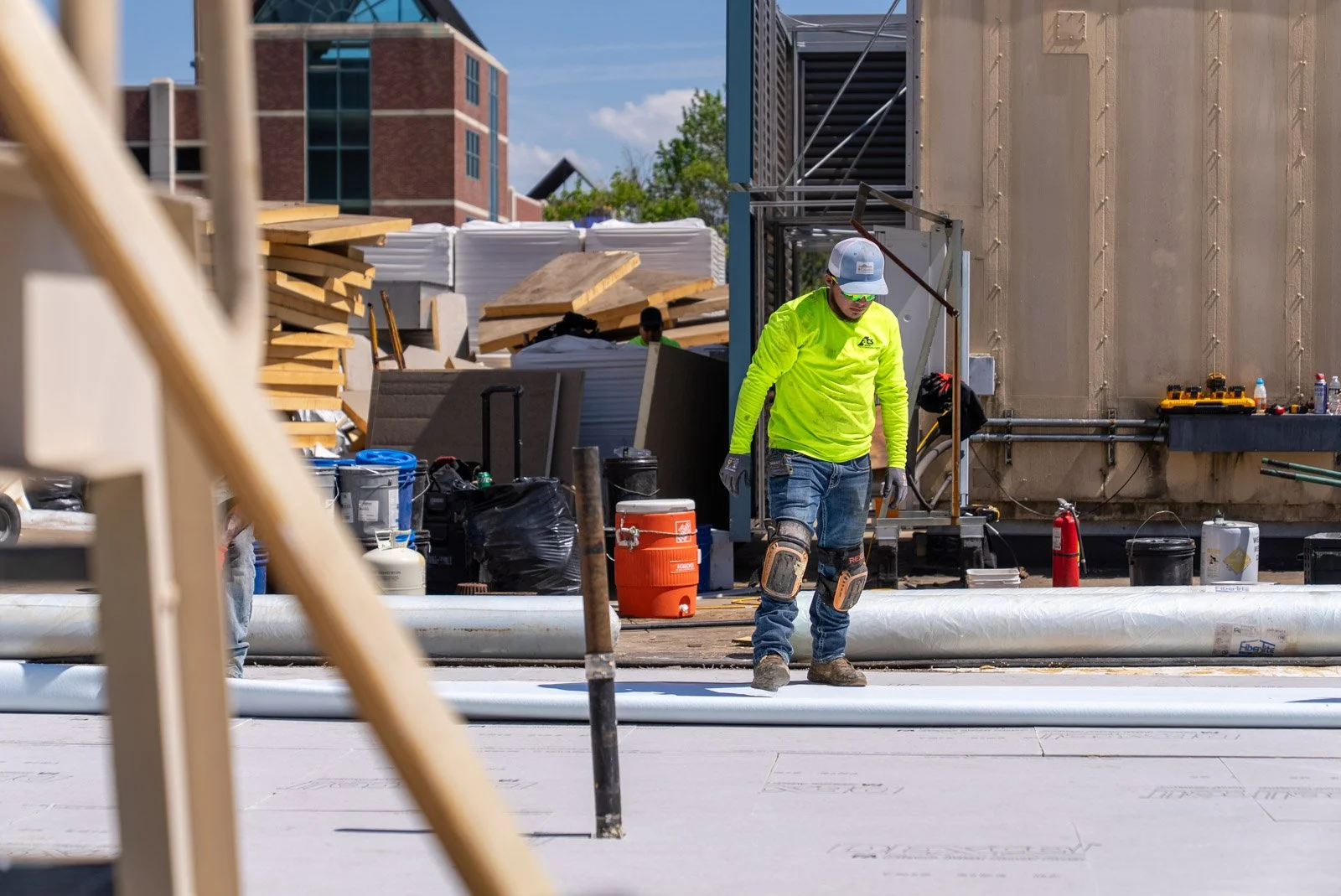
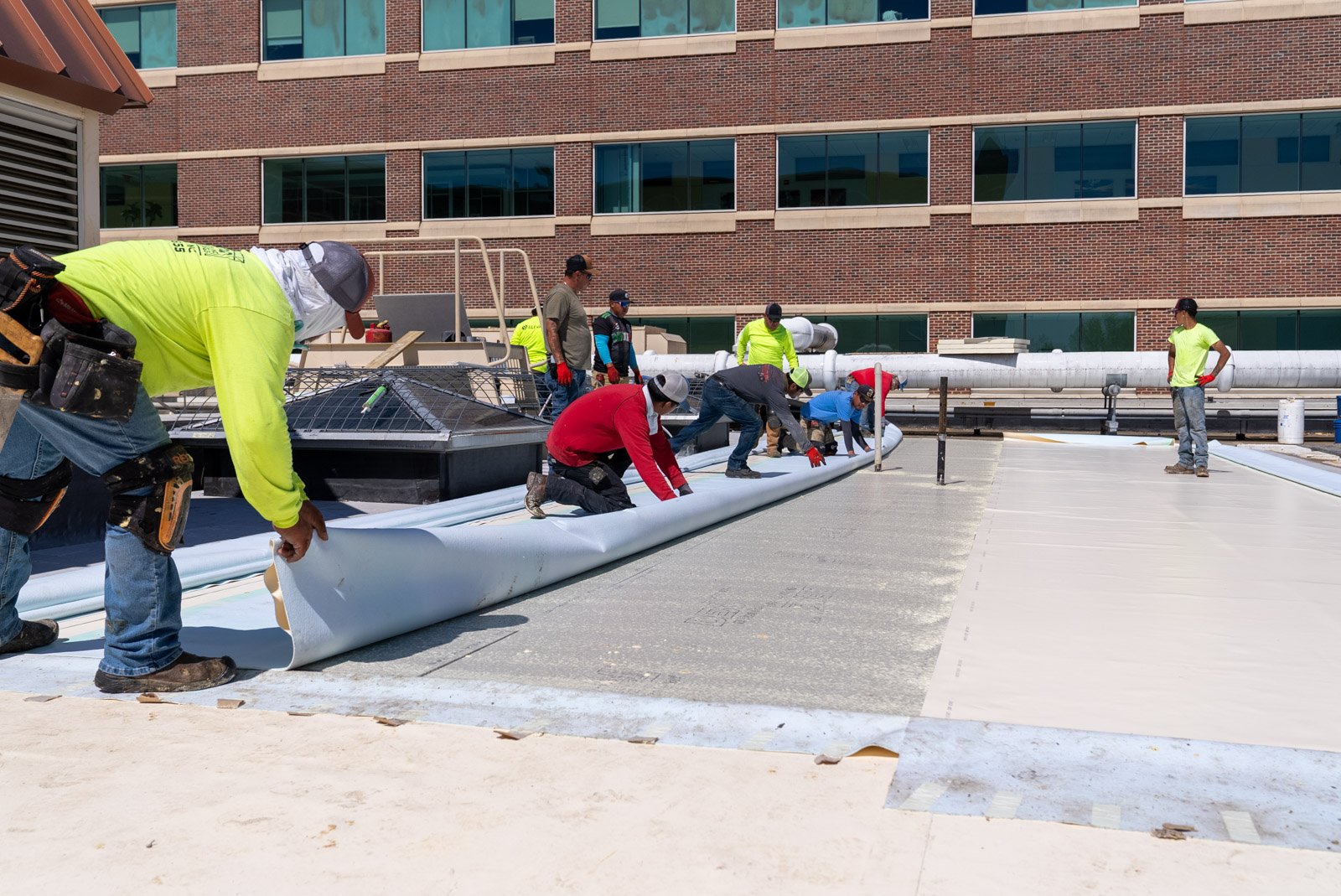
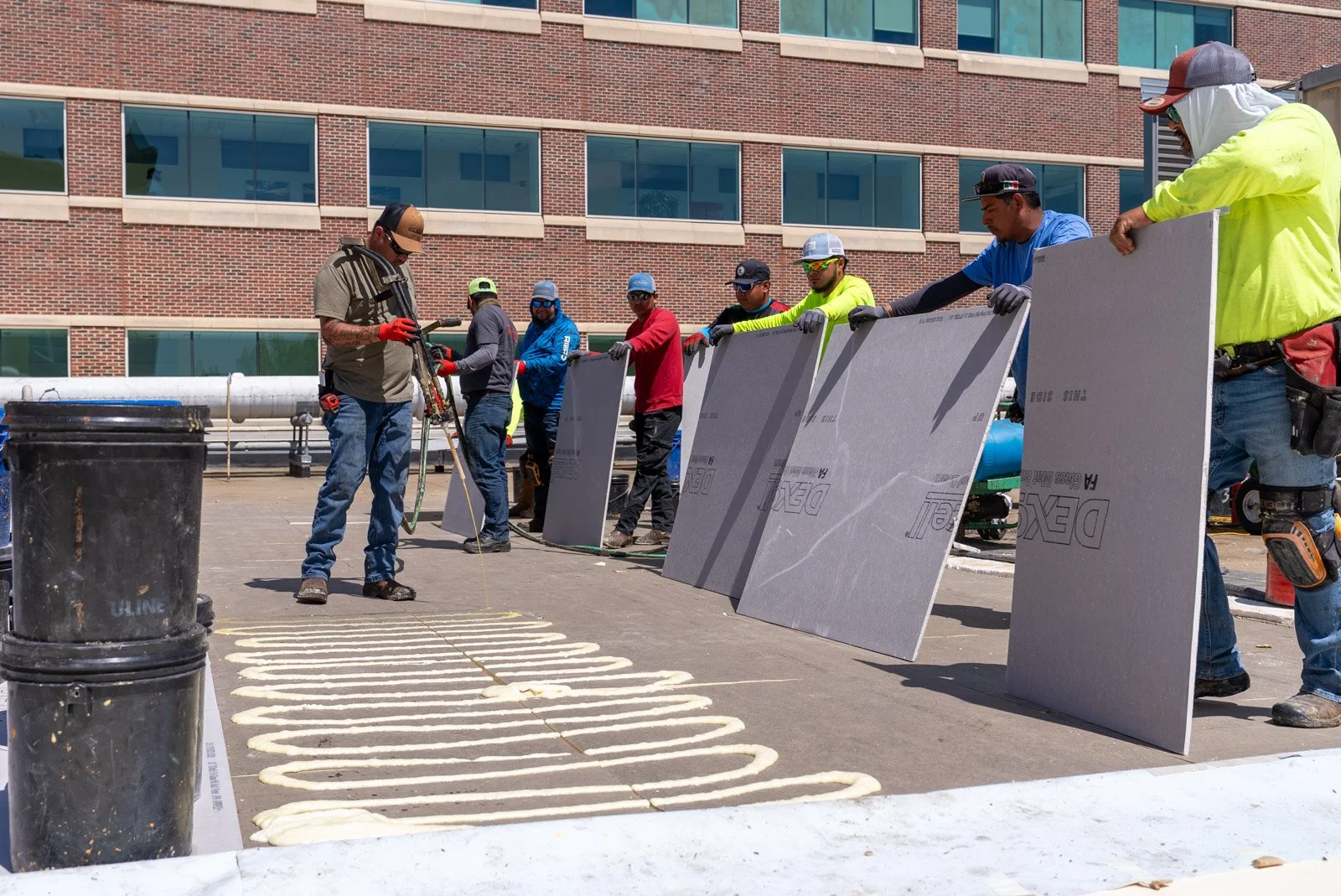
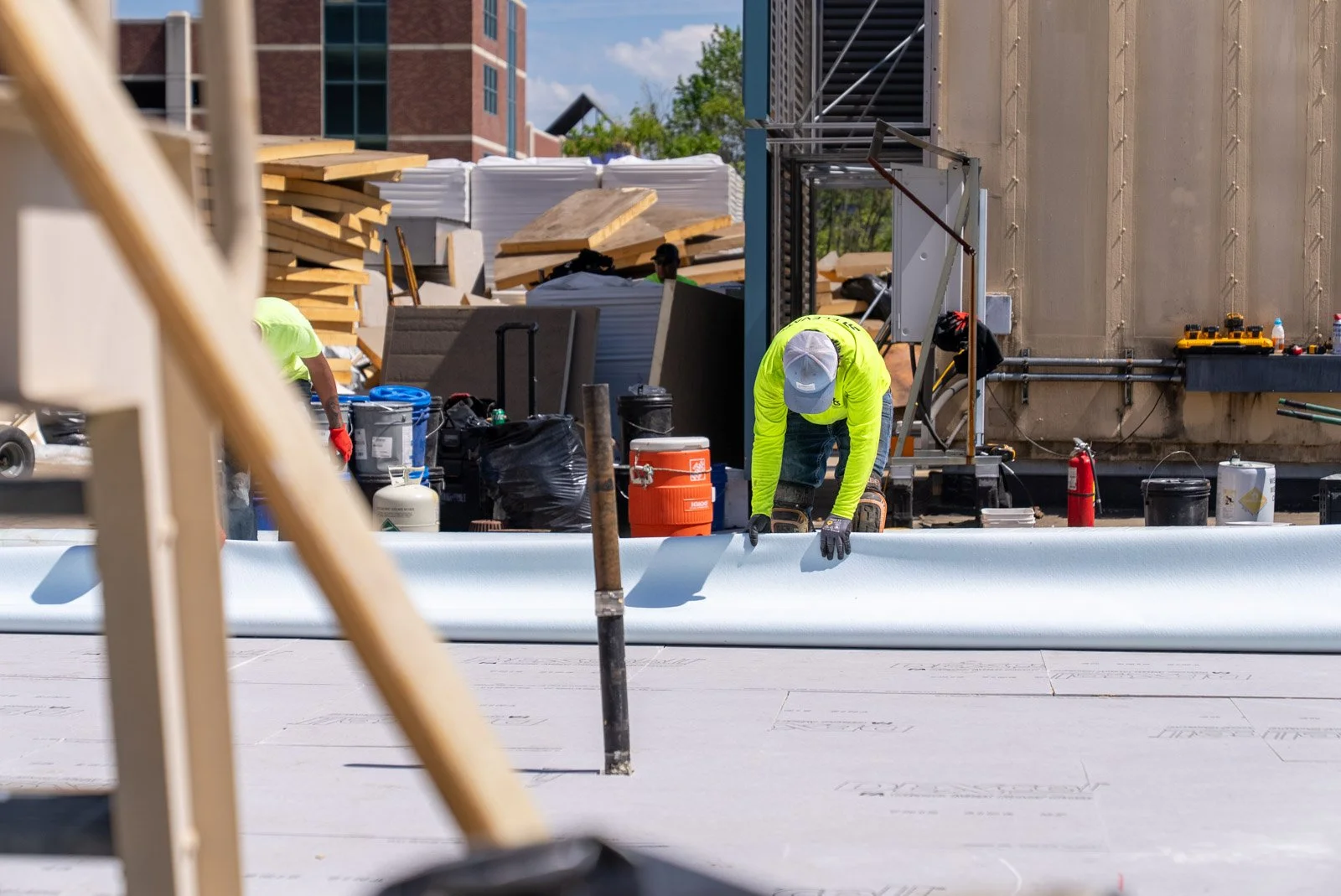
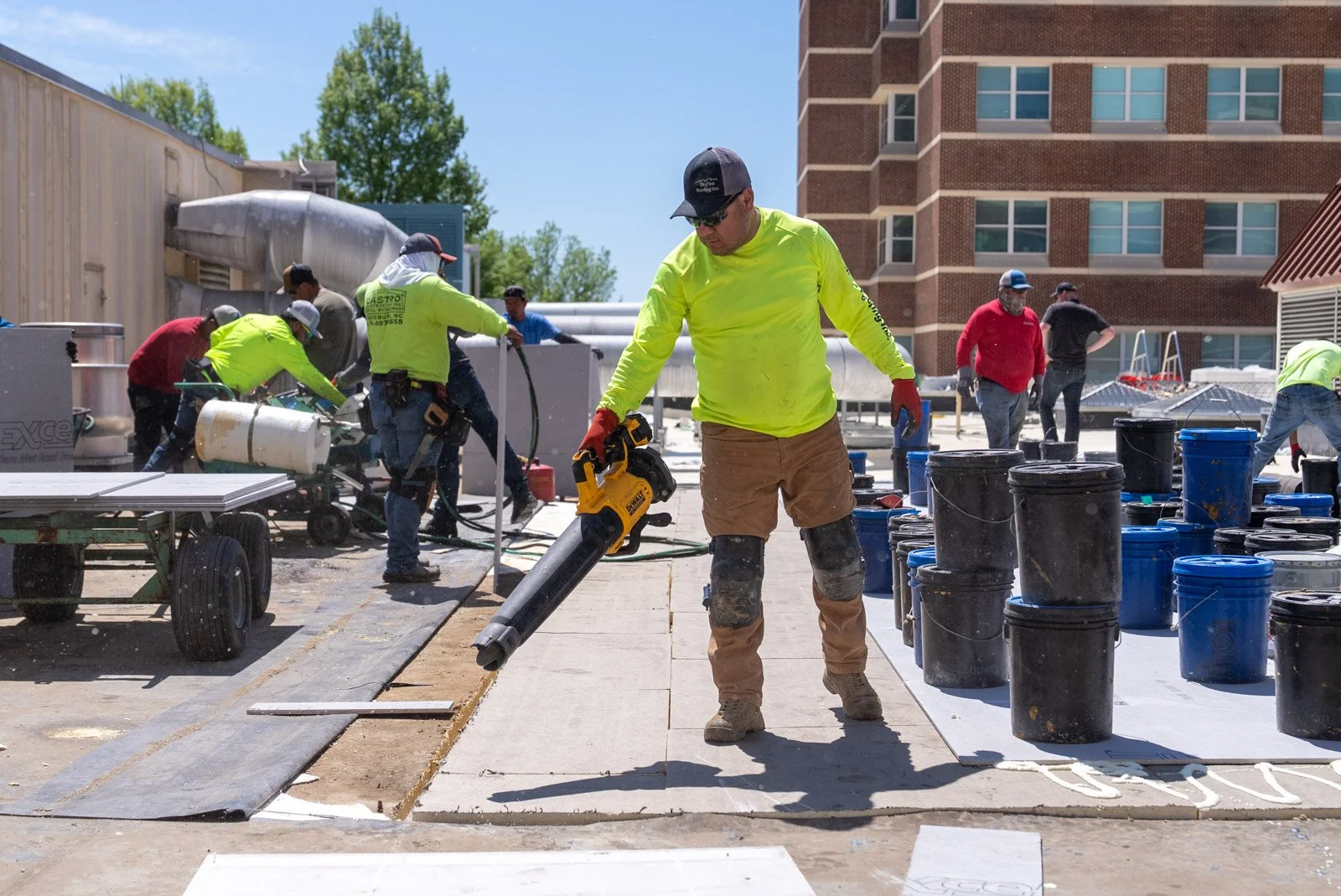
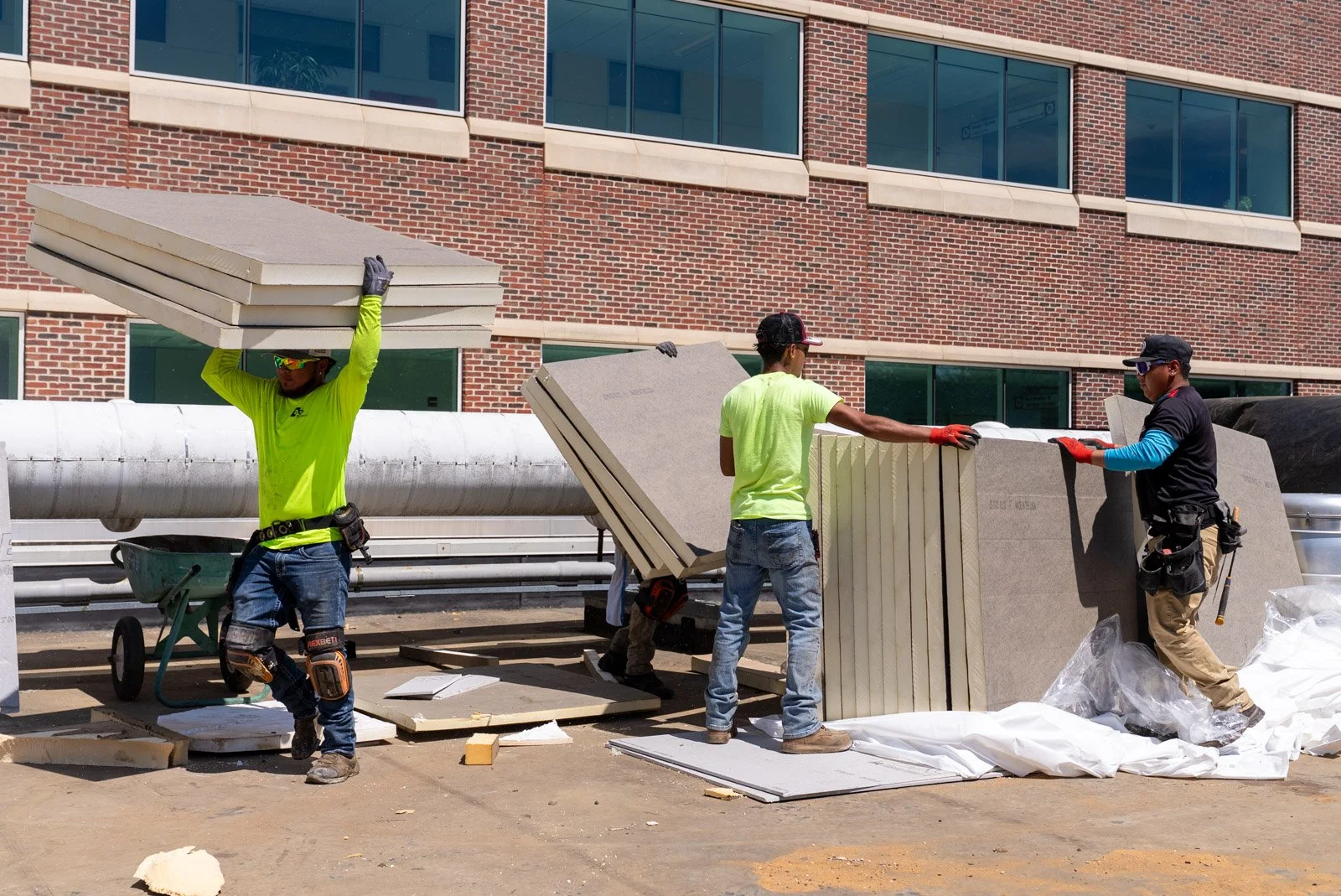
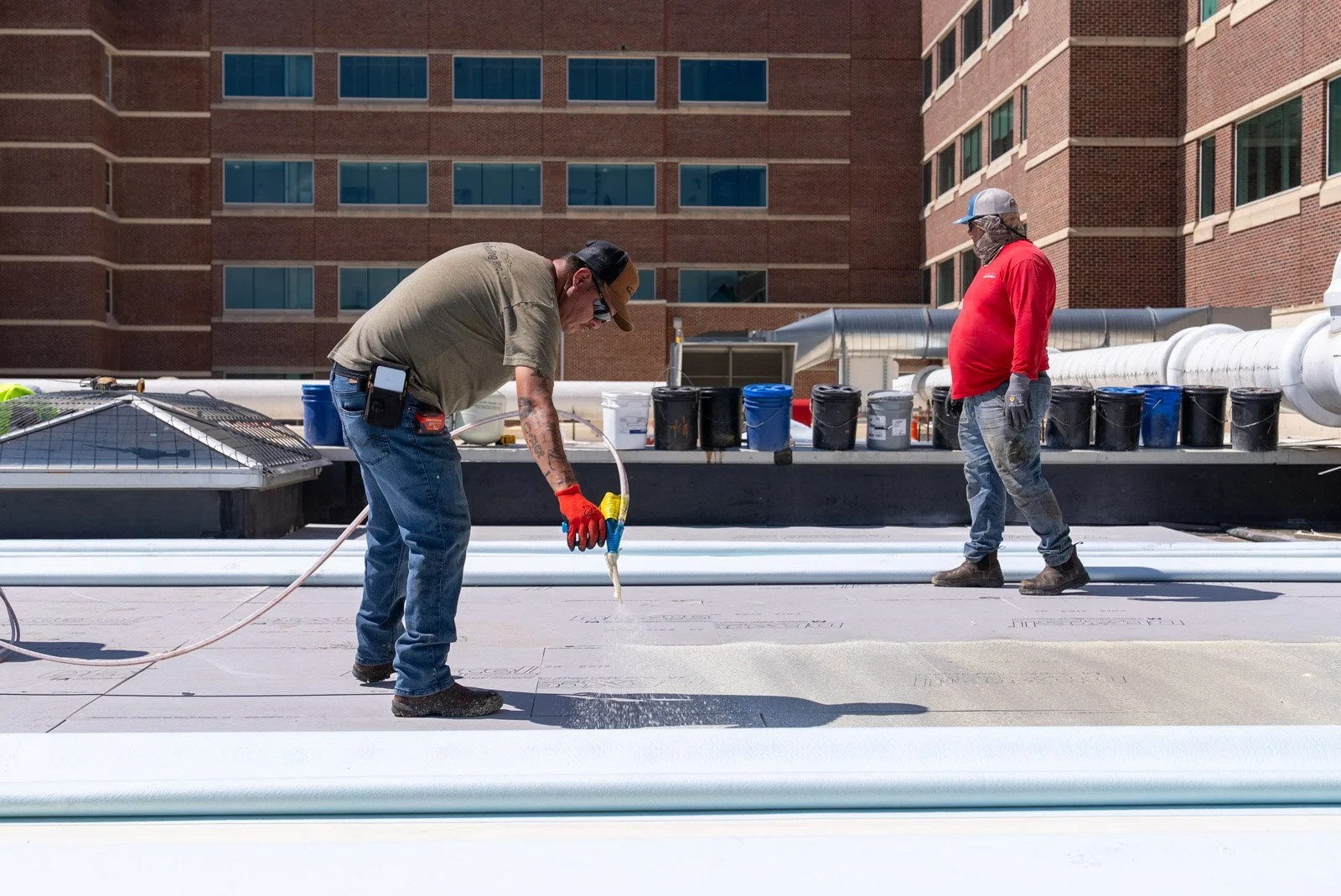
We installed a 50 mil fiber-reinforced fleece-backed membrane for its strength, reflectivity, and resistance to wear. Beneath that is a 3-inch base insulation layer adhered with a two-part low-rise foam adhesive, followed by an additional 2-inch insulation layer to improve thermal performance. A half-inch glass mat cover board was added for extra stability.
The membrane is applied using a spatter method, creating a consistent and secure bond across the surface.
A Collaborative Effort
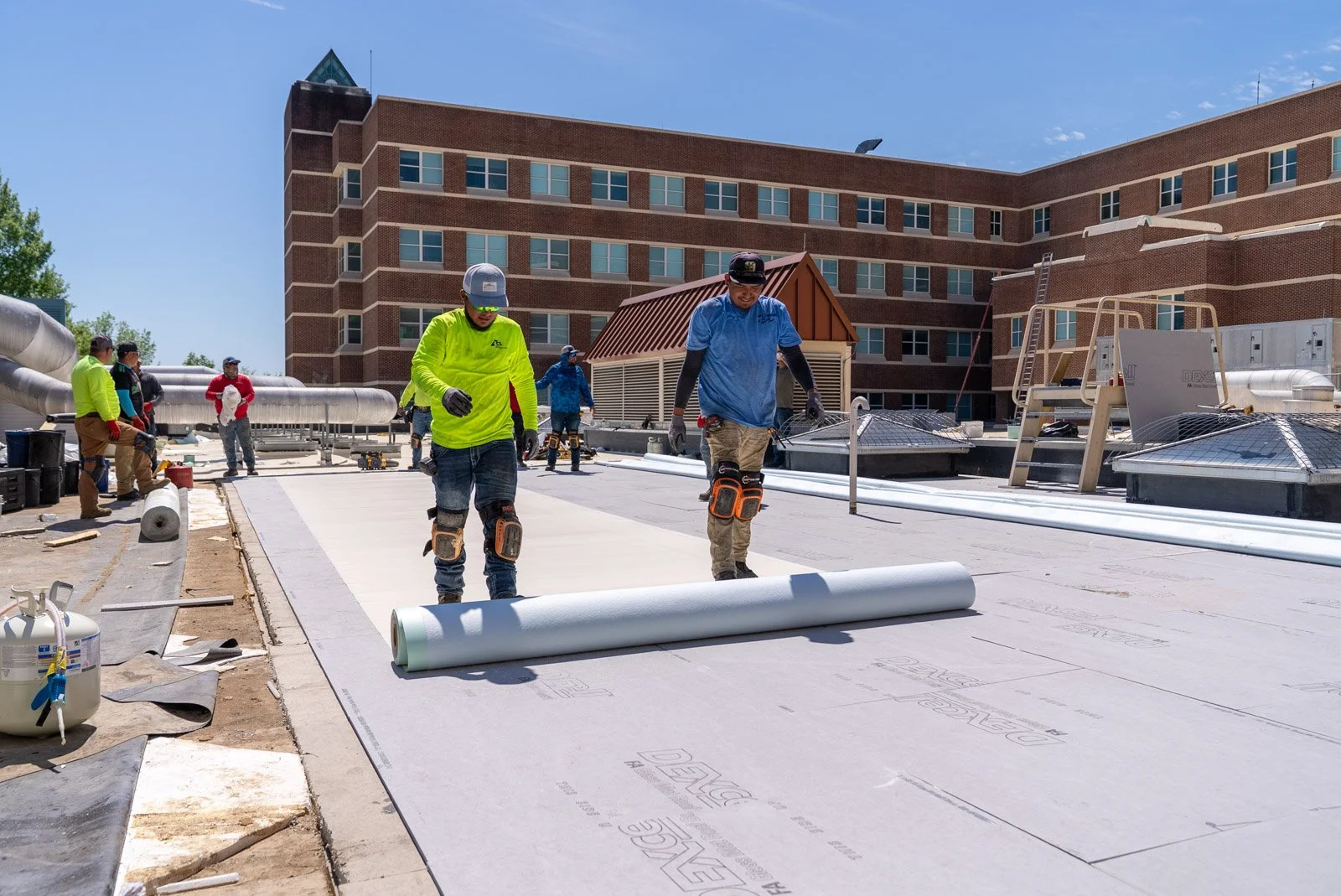
This project has been a steady collaboration with Valley Health’s facilities and maintenance teams. From early planning through installation, communication has been key to keeping everything on track.
Challenges came up along the way, which is expected on a project like this, but having a clear plan and a strong working relationship made it possible to keep moving forward.
Work We’re Proud Of
This is the kind of project we take pride in. Not just because of the complexity, but because of the responsibility that comes with working in a critical care environment. We don’t take lightly being trusted to plan, coordinate, and deliver work in a space like this.
Similar Projects