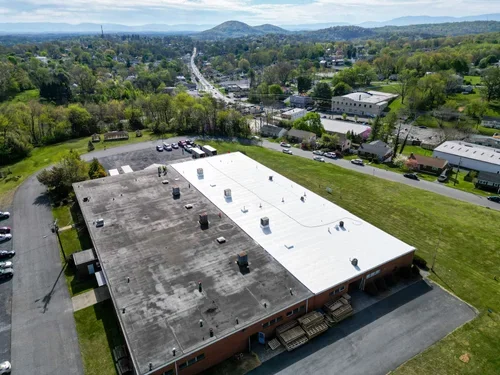
Clay Tile Roof Restoration at Luray Caverns Gift Shop in Luray, VA
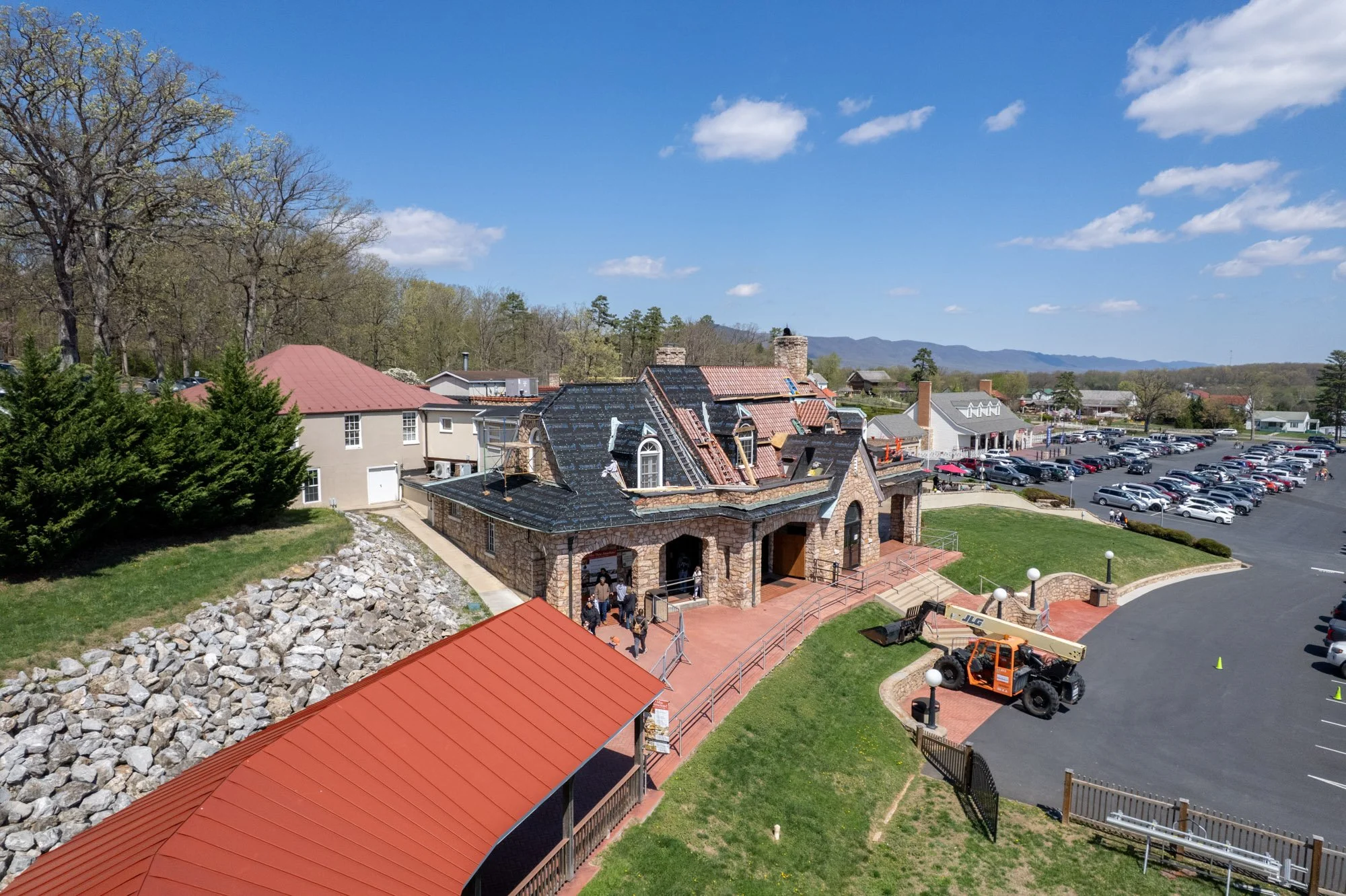
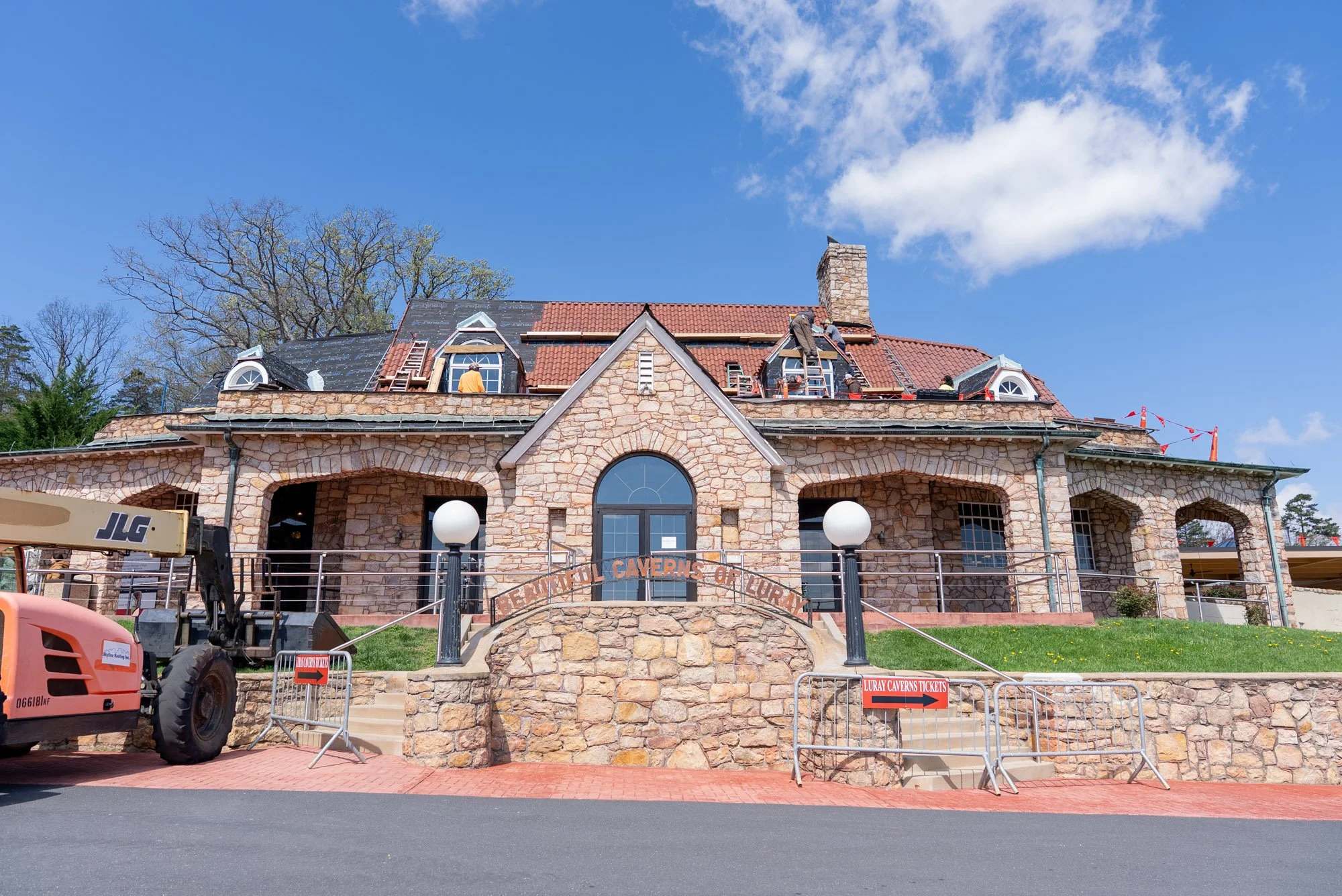
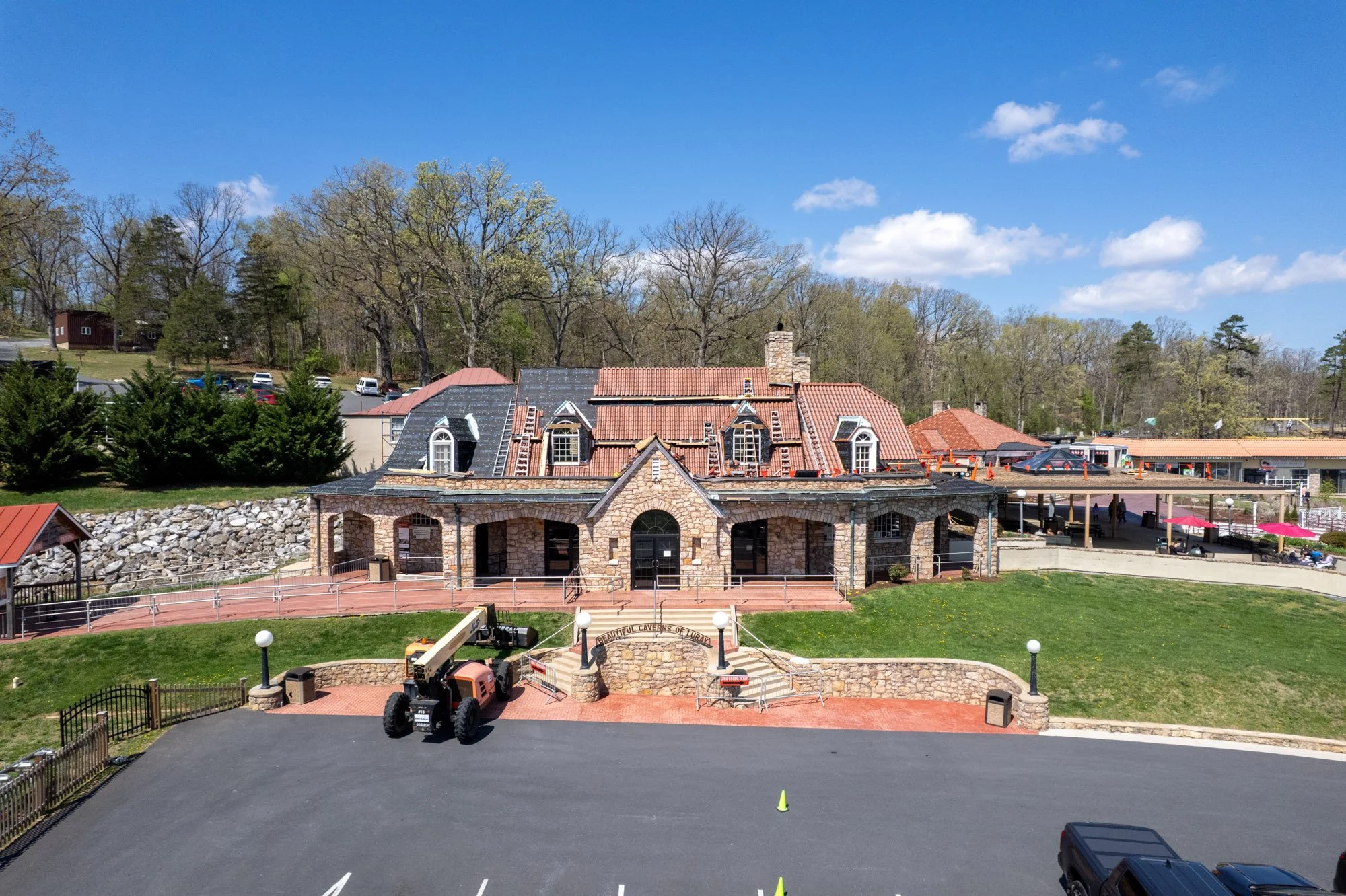
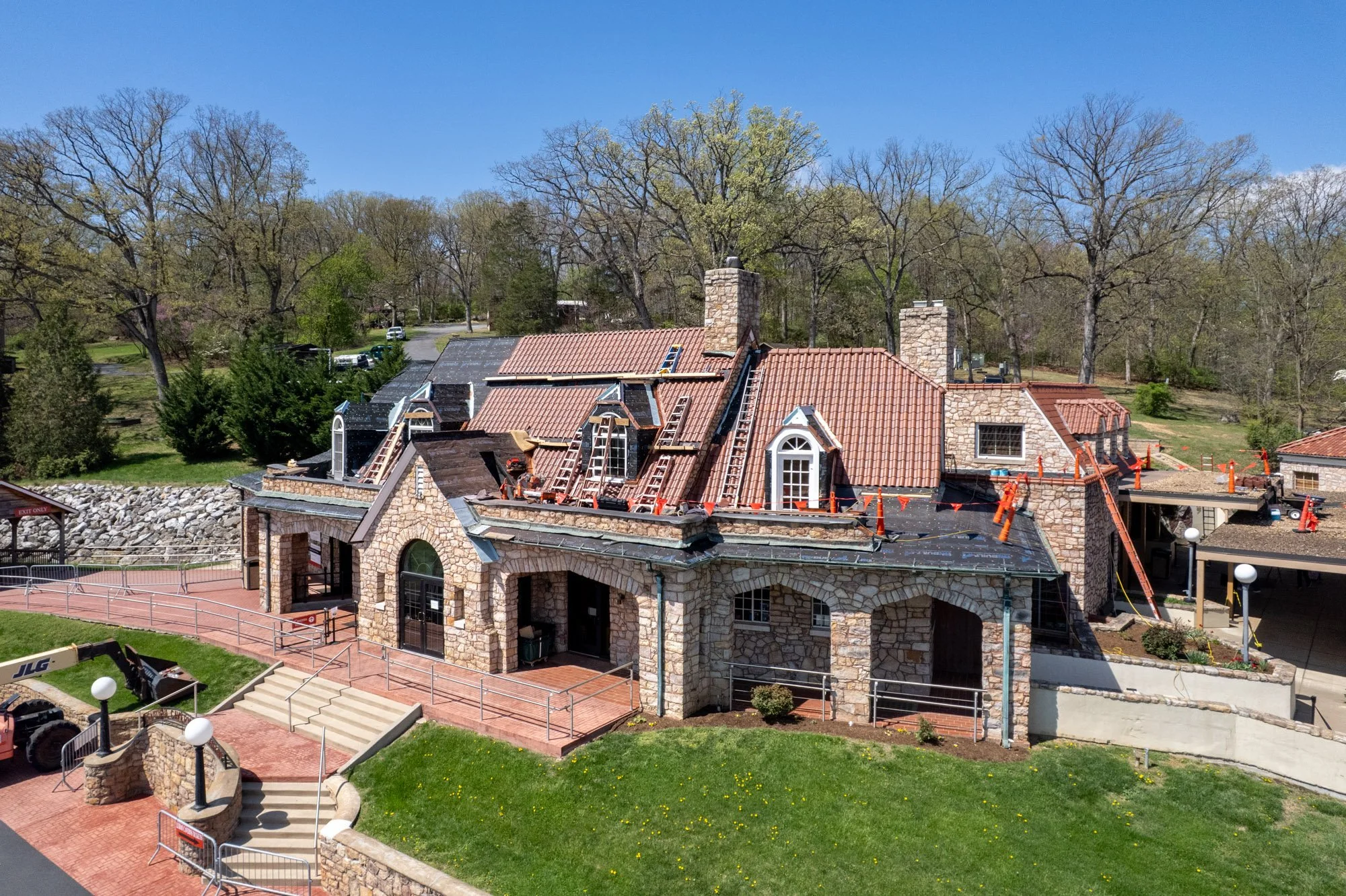
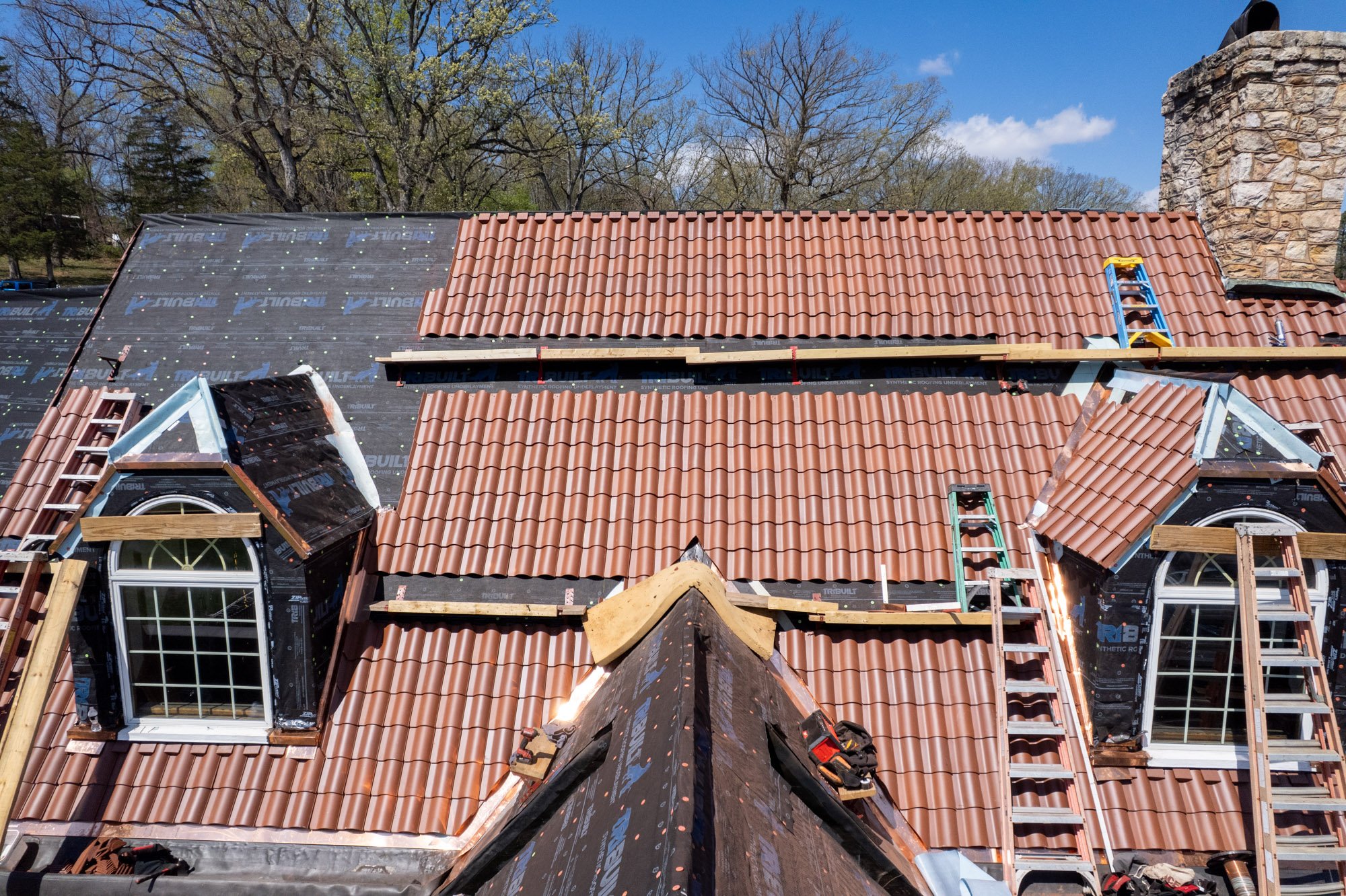
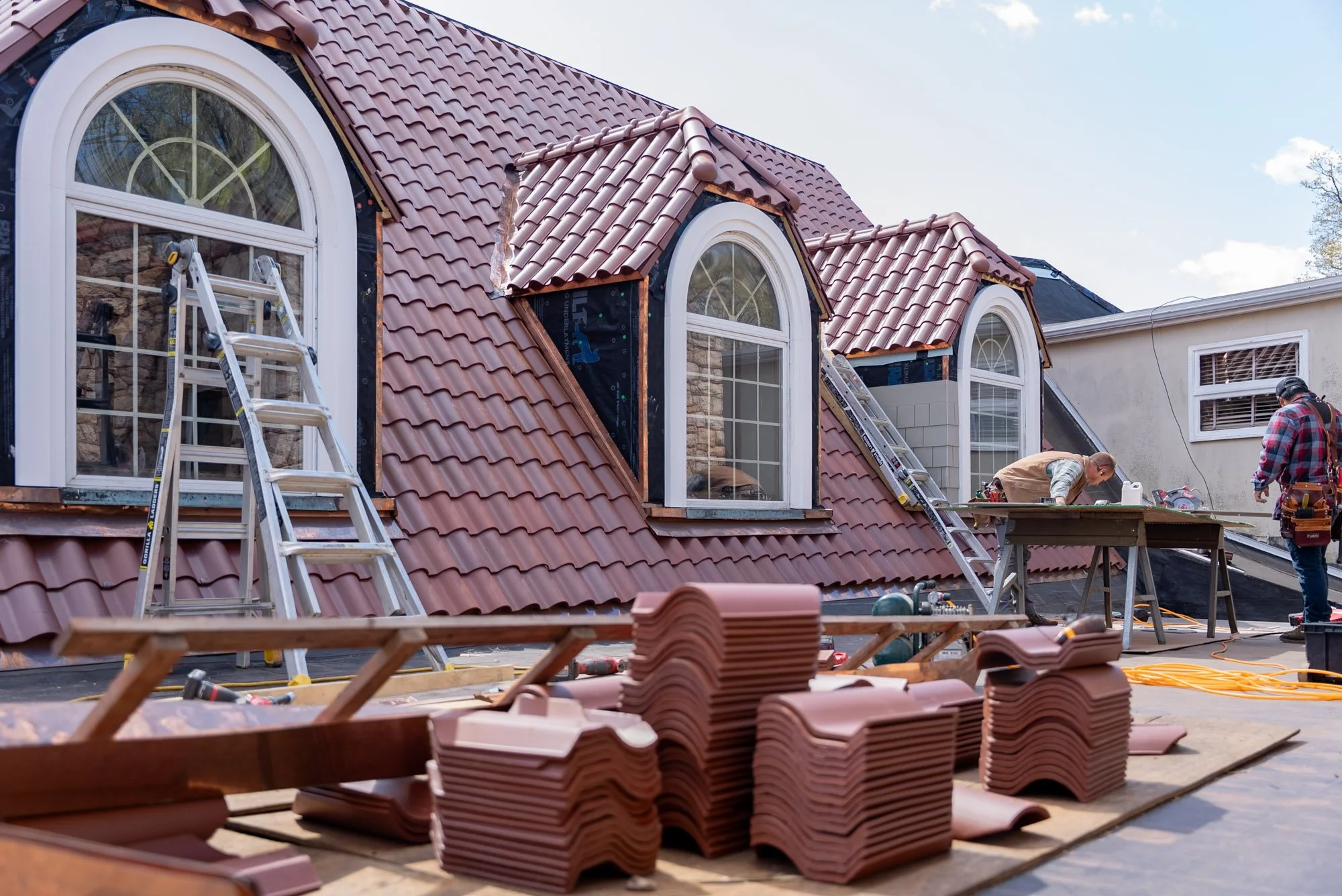
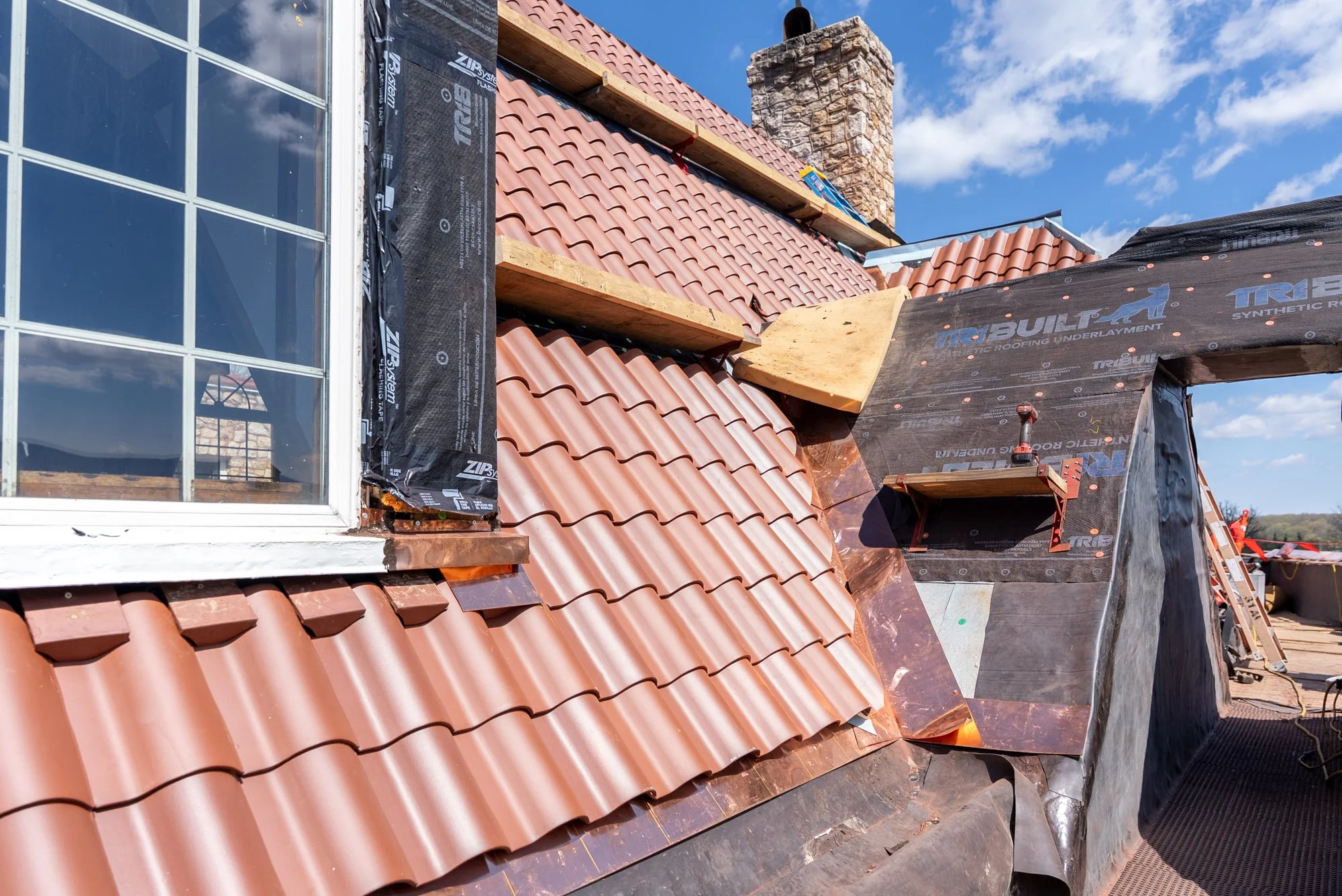
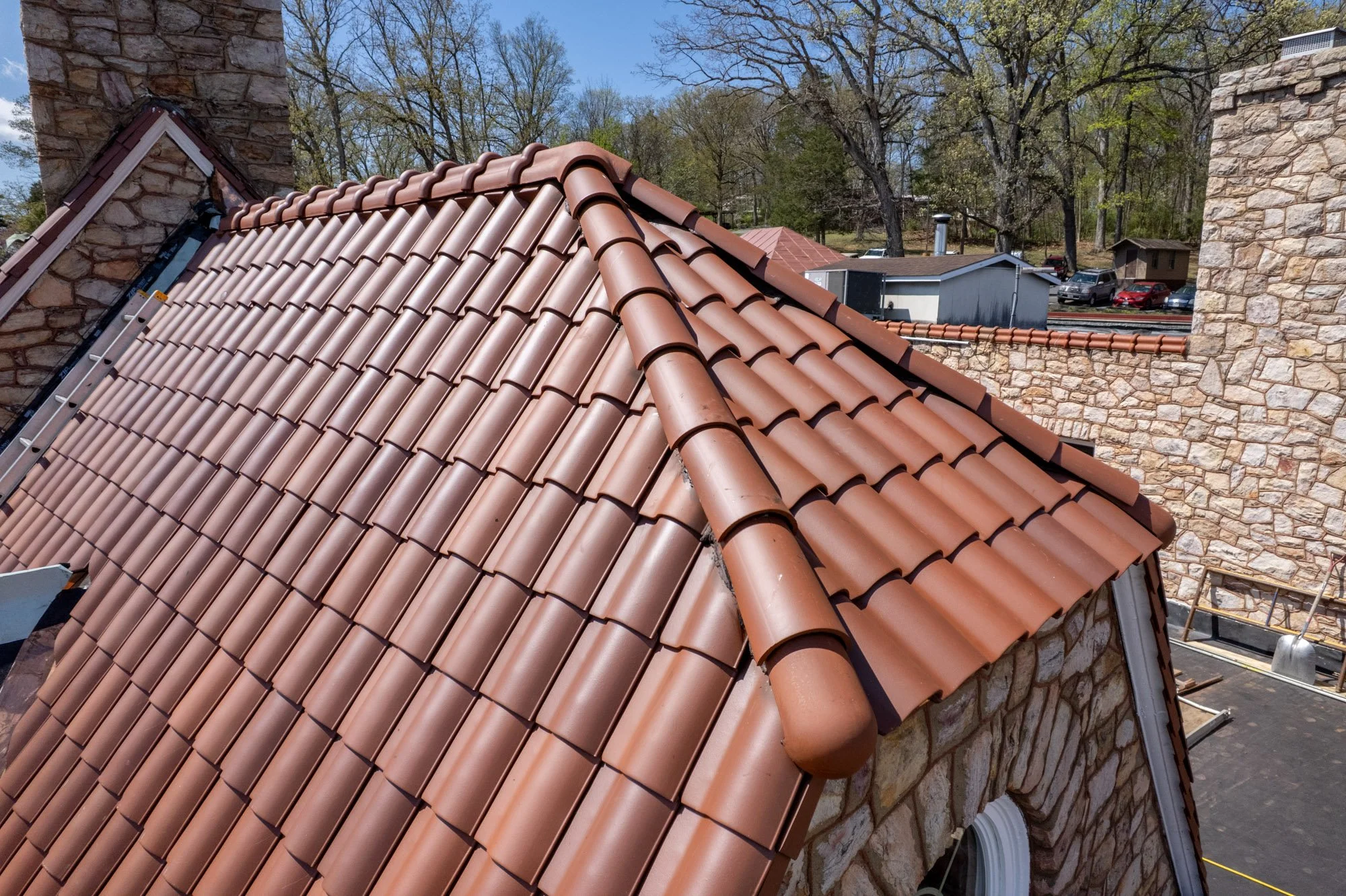
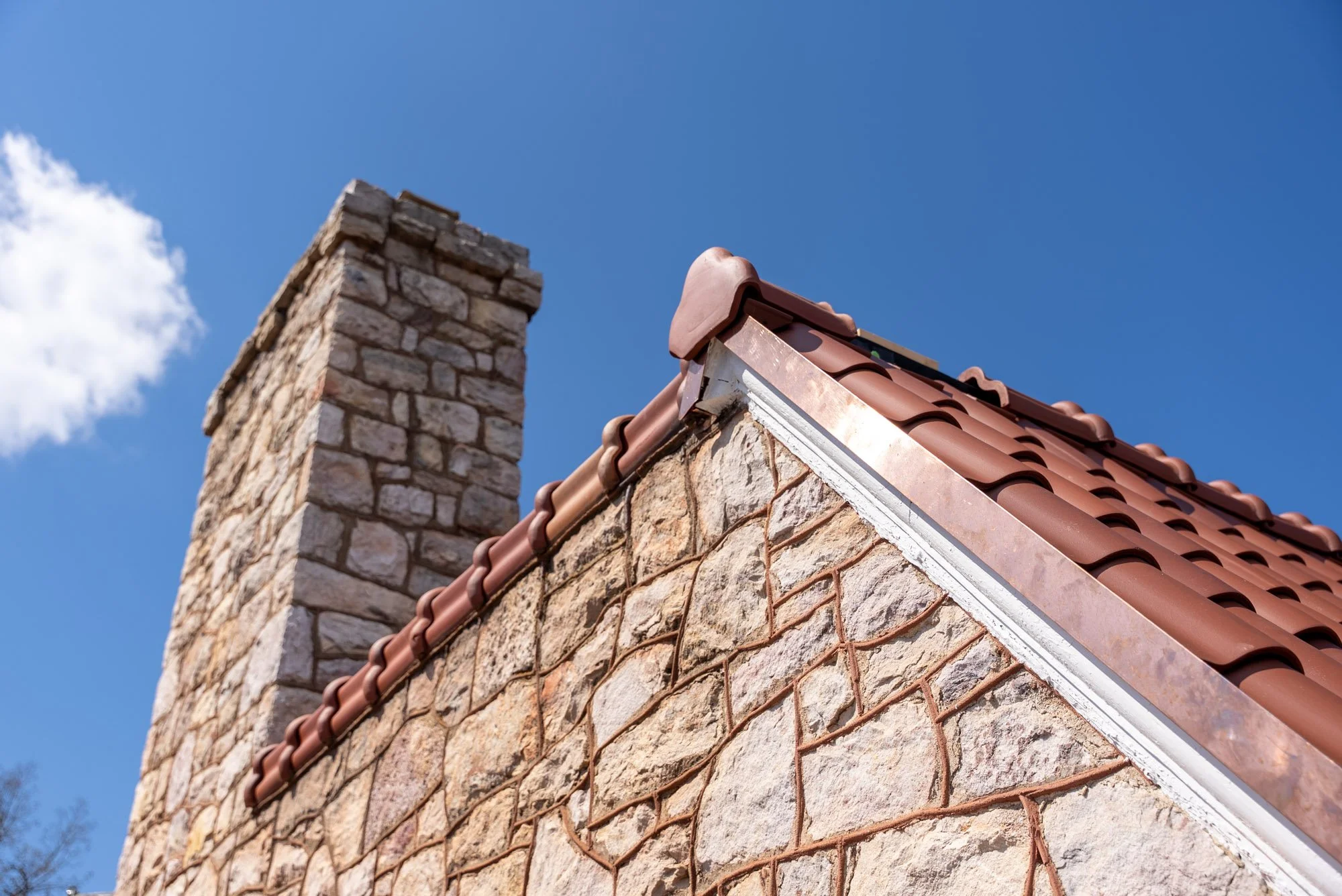
We’re restoring the historic Ludowici clay tile roof at the Luray Caverns Gift Shop in Luray, Virginia, rebuilding the underlayment and flashings and reinstalling the clay tile with long-life details like copper nails and copper flashings.
The tiles have held up well, but tile roofs fail from the bottom up. When underlayment and flashings age out, water intrusion risk rises—even if the tile still looks great. That’s why this restoration focuses on the system beneath the tile.
Our clay tile roof restoration approach at Luray Caverns
We’re restoring the roof system from the deck up, then reinstalling the clay tile with the alignment and spacing tile systems require.
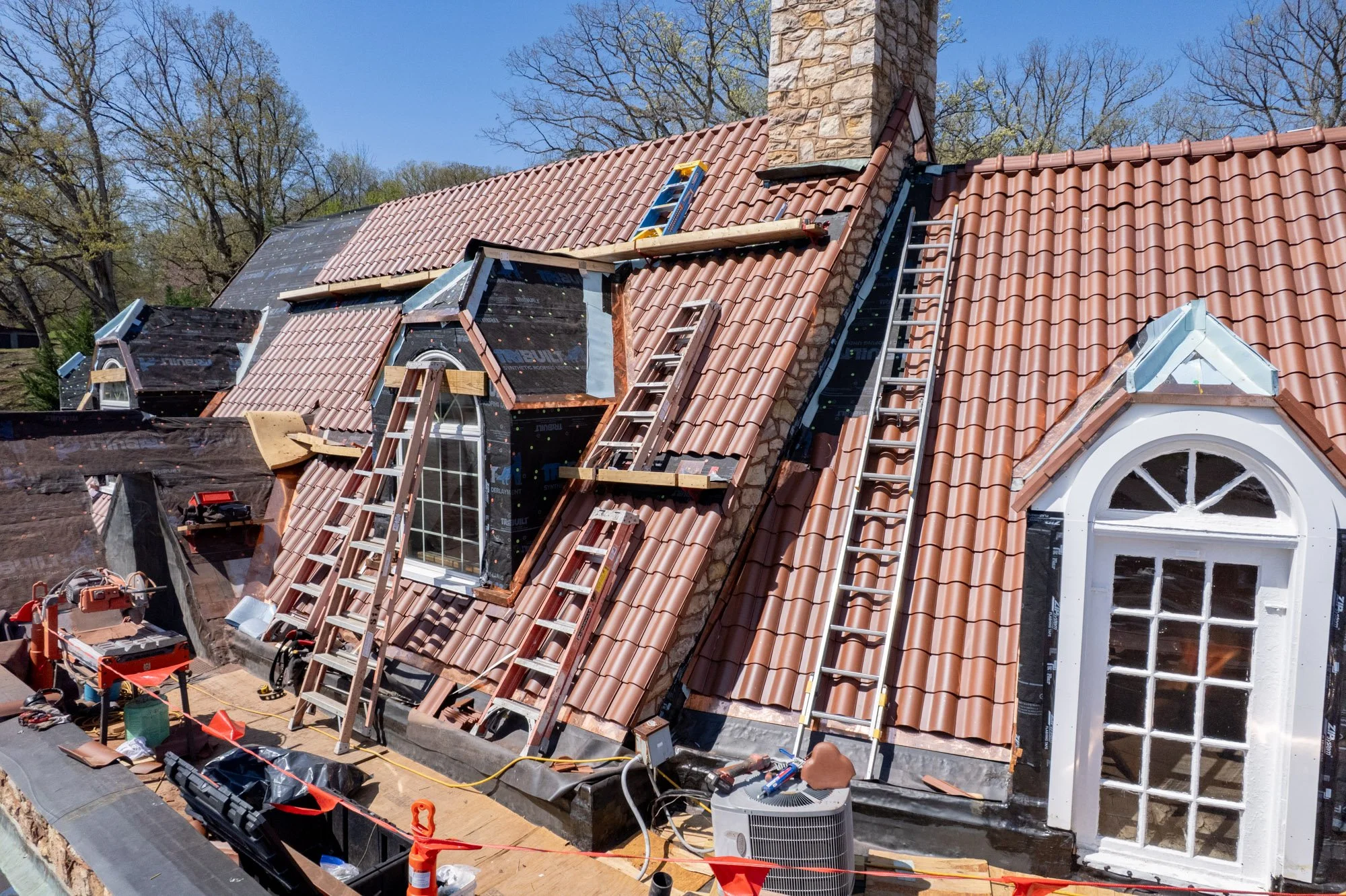
Careful removal and staging: We remove existing clay tiles and the worn underlayment so we can rebuild the system properly.
Modern waterproofing foundation: We install two layers of ice and water shield for enhanced protection, followed by a high-performance synthetic felt.
Precise tile reinstallation: Clay tile is set individually. Small alignment issues can compound across the roof, so layout and consistency matter at every course.
Why copper matters in long-life clay tile systems
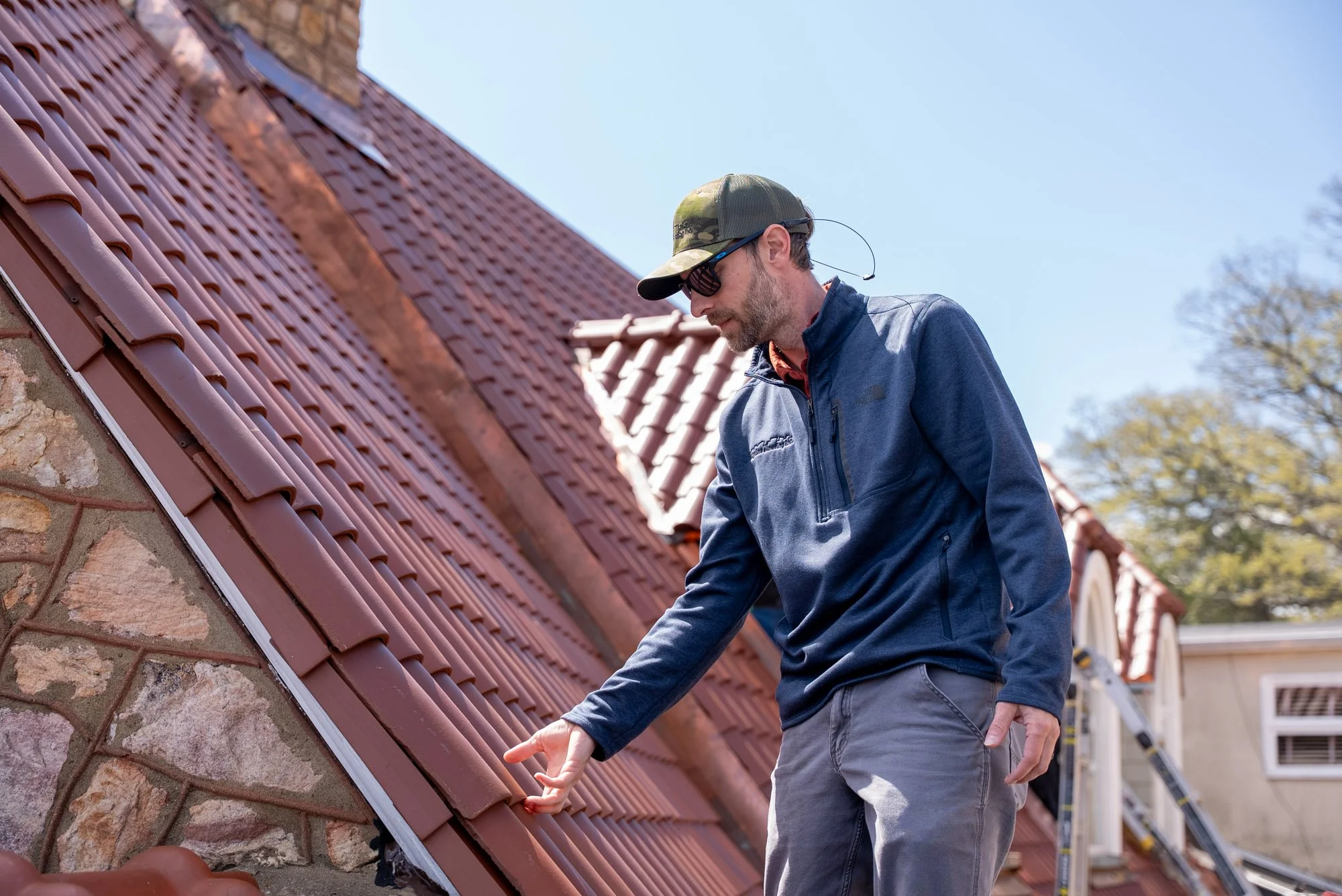
When the goal is a roof system that can perform for decades, the metal details can’t be a weak link. That’s why we used copper throughout:
Copper nails to secure each tile
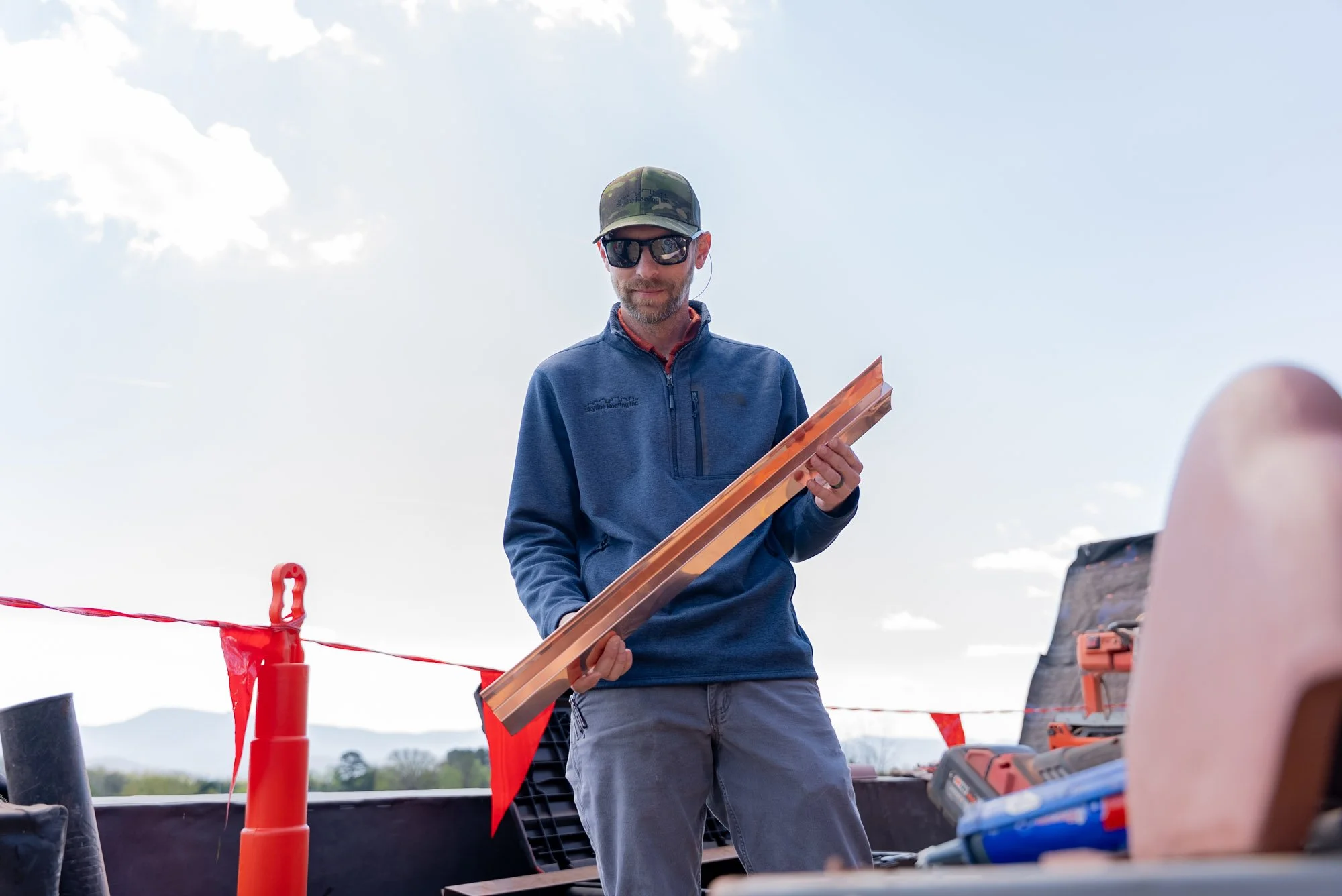
Copper flashings at transitions and edges
Copper is exceptionally durable, and it weathers in a way that aligns with the long service life of architectural clay tile systems, including Ludowici tile
The real constraints on a historic clay tile restoration
This project has a few constraints that shape how we plan and execute the work:
Tile lead times: Clay tile materials can require 30–40 week lead times, so planning needs to start well in advance.
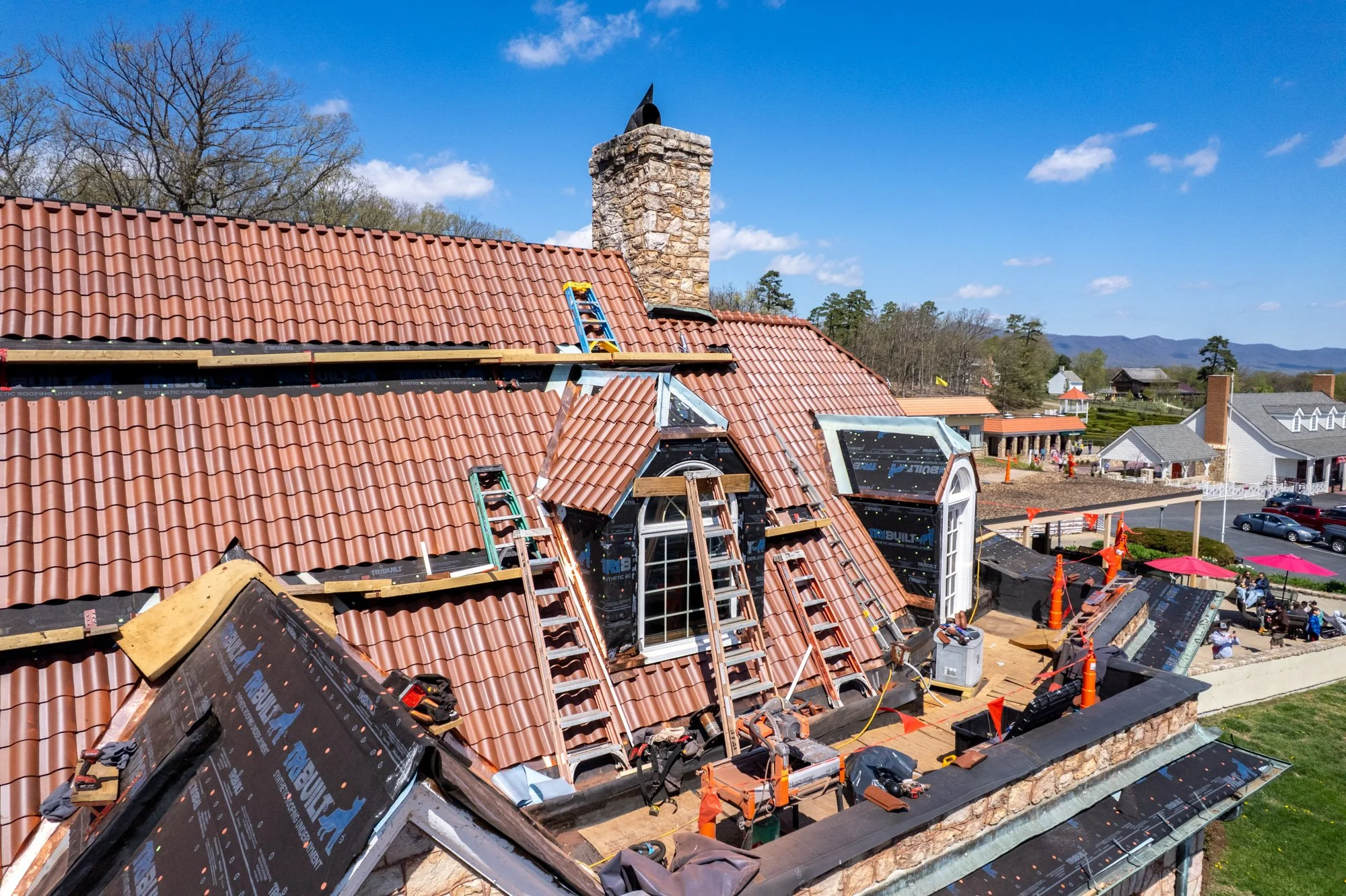
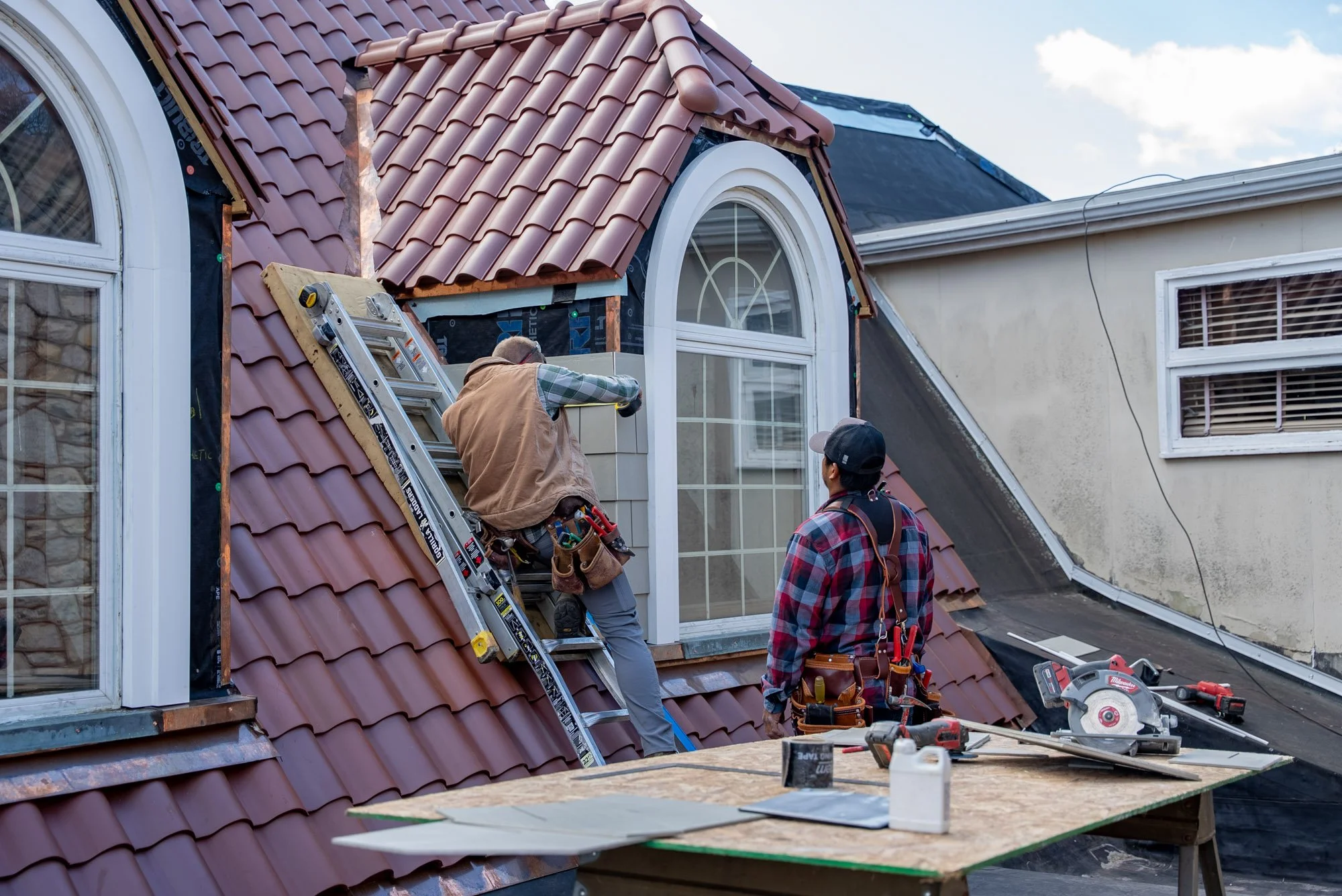
Steep pitch: The 16:12 pitch can’t be walked on, so our crew works from ladders and roof jacks, which requires careful staging and a deliberate pace.
Active site coordination: Luray Caverns is a high-traffic destination, and the gift shop remains open during construction. We phase work to support daily operations while keeping safety and protection standards high.
FAQ
-
A well-built clay tile roof can last for many decades, and in some cases the tile can outlast the underlayment and metal details beneath it. That’s why restoration often focuses on rebuilding the system under the tile rather than replacing all the tile.
-
Most failures start underneath—underlayment breaks down, flashings age, or fasteners corrode. When those components stop doing their job, water intrusion becomes more likely even if the tile itself still looks good.
-
Ludowici is a U.S. manufacturer of architectural clay tile (established in 1888) known for long-life tile systems used on historic and high-end buildings. On this project, the existing Ludowici clay tiles are a key part of what we’re preserving.
-
Timelines vary based on roof size, complexity, access, and weather. Planning can be the longest phase—especially when clay tile materials have 30–40 week lead times—so early coordination is essential.
-
Copper holds up over the long term and is a strong match for clay tile systems where the goal is decades of performance. Using copper for nails and flashings helps align the lifespan of the details with the tile.
Planning a clay tile roof restoration in Virginia?
If you’re evaluating a historic roof or clay tile roof restoration for a commercial property in Virginia, we can help you plan the scope, materials, lead times, and site constraints before work begins.
Similar Projects